Sample No. 0098
Wedding Weather and Videography: Planning for Rain, Sun, Wind and Snow
Rain, clouds, sun, wind and snow each shape a wedding film. Plan flexible locations and sunset timing, then let your videographer adapt to the day.
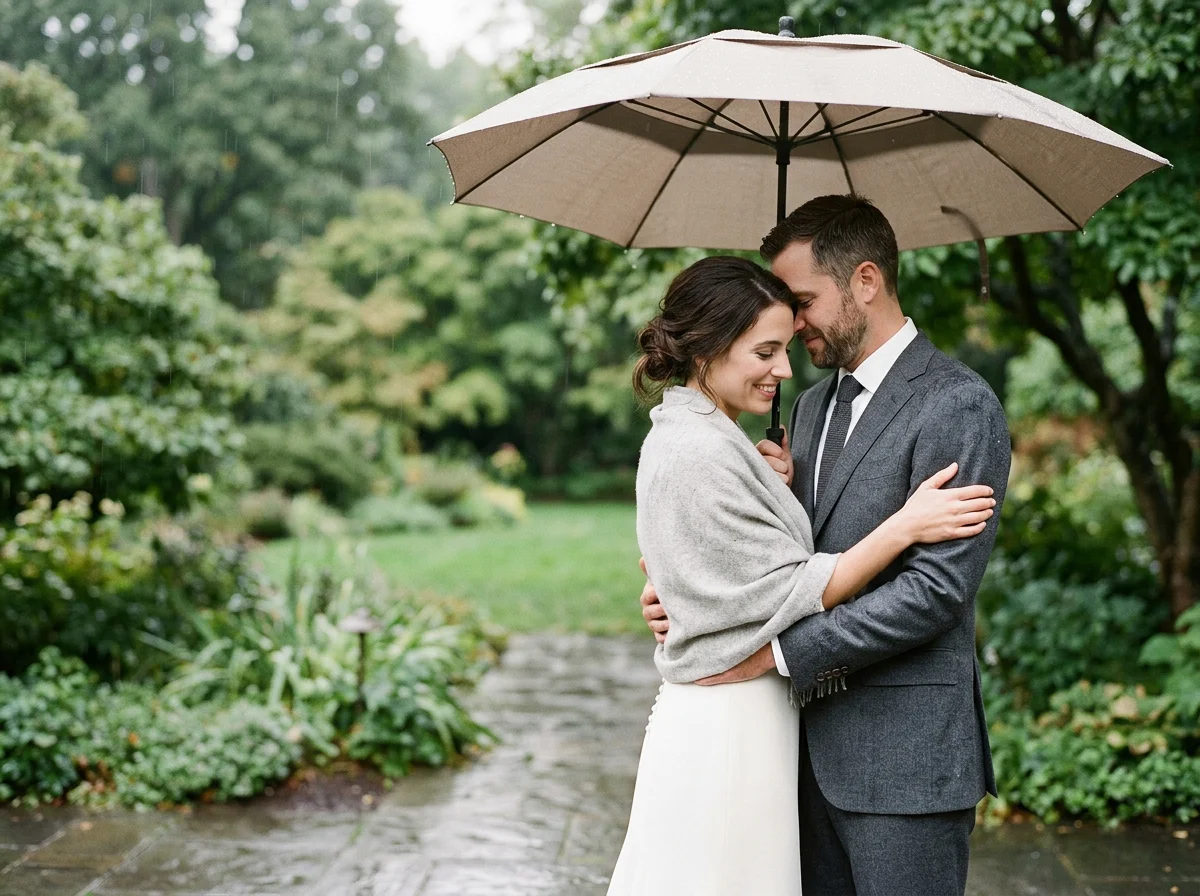
Weather can change the look and feel of a wedding film, but it doesn’t have to decide whether the footage feels memorable. Rain can bring reflections and intimacy; cloud cover can soften light; wind can add motion; and snow can give a winter celebration a distinct atmosphere. The practical advantage comes from planning for flexibility, then letting the conditions become part of the day.
Plan the schedule around light
Sunset timing shifts with the season, so a portrait window that works for a summer wedding may fall at a very different hour in winter. If outdoor portraits or cinematic footage matter to you, talk with your photographer and videographer while building the schedule. They can help identify when the light will suit the locations you have in mind.
Golden hour—the warm, softer light around sunset—is a popular choice, but it needs space in the day’s timeline. Discuss the timing before the schedule is settled, especially if portraits are important and the ceremony or reception leaves little room for a break. The goal is to make a realistic window for filming rather than assume the same sunset schedule will work in every season.
Different skies offer different looks
Bright sun, cloud cover, rain and snow each create a different visual setting. Overcast skies can produce soft, even light that works well for portraits. By comparison, direct midday sun can create strong shadows and high contrast, and people may squint when facing the light.
That doesn’t mean a sunny forecast is a problem. A videographer can look for shade, adjust where people stand, or use the surroundings to change the light on a scene. Sometimes a small change in position makes a noticeable difference. When you’re choosing portrait locations, it helps to have nearby alternatives with shade or cover.
Rain can become part of the film
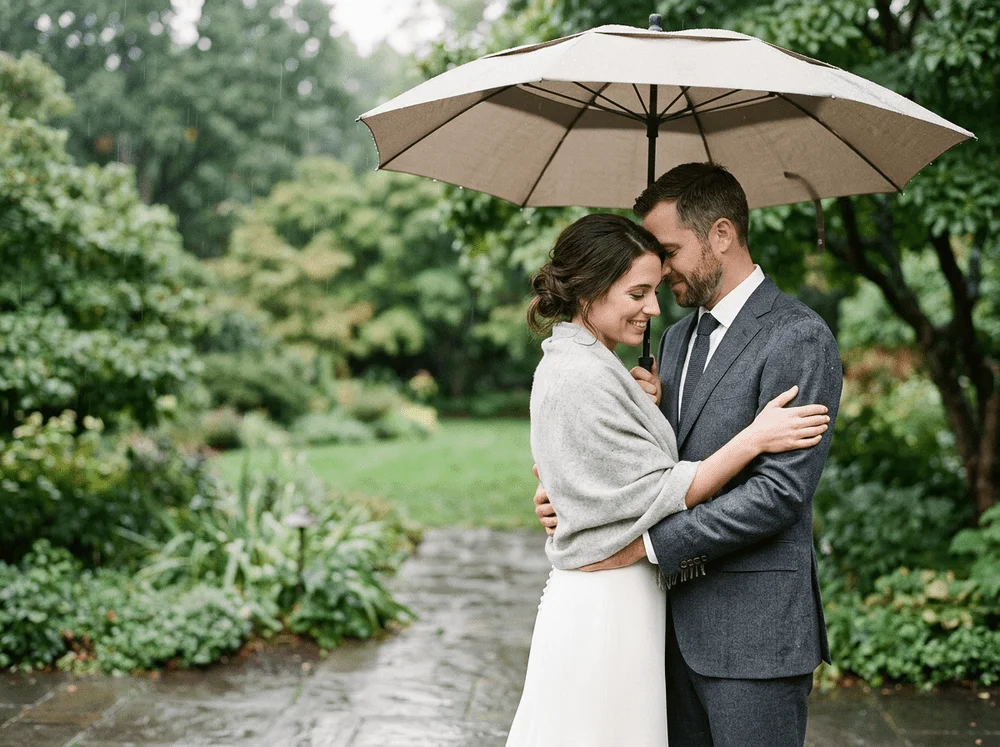
Rain may disrupt an outdoor plan, but it doesn’t automatically rule out outdoor footage. Wet streets and sidewalks can catch reflections, while falling rain adds movement to the scene. An umbrella can also appear naturally in the film. If the couple feels comfortable stepping outside, those details can lend the footage a more intimate, atmospheric quality.
It’s useful to decide in advance what you’d be comfortable doing in light rain, and what would mean moving indoors. That conversation can help the day feel less uncertain if the forecast changes. A covered area or indoor portrait location gives the couple and the crew somewhere to go without having to start from scratch.
Wind brings movement, with a few practical challenges
A breeze can give footage an unplanned sense of motion: a veil shifts, trees move in the background, or a dress flows as someone walks. These details can make a scene feel connected to its setting instead of staged.
Wind can also make outdoor audio and some setups more difficult. Ask your videographer how they plan to adapt if it’s windy, especially during outdoor parts of the day where clear sound matters. Being ready to change position or location can help keep the filming comfortable while still making use of the surroundings.
Keep a clear alternative for outdoor plans
If you’re planning an outdoor ceremony or portraits, choose a backup location before the wedding day. It might be a covered area, an indoor portrait spot, or another ceremony space. The source of the decision should be comfort and safety: if conditions become uncomfortable or unsafe, the couple and guests need a practical place to move.
A backup plan doesn’t require giving up on an outdoor ceremony as soon as clouds appear. It simply makes the choice easier when the weather is poor. Couples can also check that the videographer knows both the preferred locations and the alternatives, so a change of plan doesn’t become a last-minute search for somewhere suitable.
Leave room for the day as it unfolds
Weather forecasts can shift, and the conditions on the day may differ from what you expected. Rather than build the whole schedule around one forecast, make a plan that can absorb a location change or a short delay. Talk through the options with your photographer and videographer, including how much time is available for portraits and where filming can continue if outdoor plans change.
Some moments that feel unplanned can become especially vivid on film: a couple laughing when rain starts during portraits, walking hand in hand through snow, or guests hurrying under cover during a sudden downpour. Those scenes may not match the original plan, but they can capture the feeling of the day in a way a perfectly controlled backdrop can’t.
Choose a videographer who can adapt
Outdoor filming calls for flexibility as light, weather and locations change. When comparing videographers, ask how they adjust camera position and filming plans in different conditions. It’s also useful to discuss which moments and locations matter most to you, so the team knows what to prioritize if time or weather narrows the options.
Xpression Video Productions describes its approach as adapting to the environment rather than expecting the day to follow a script. Couples planning a Toronto wedding can explore Xpression Video Productions’ videography services or contact the company to discuss their plans.
A flexible schedule, a backup location and a conversation with your videographer give you practical choices when the forecast changes. If conditions allow, the weather itself may become one of the details that makes the finished film feel true to your wedding day.