Sample No. 0086
Eight Practical Ways to Stretch an Engagement Ring Budget
Compare stone qualities, settings and sellers before you buy. These eight ideas can help you shape a ring that fits your budget and priorities.
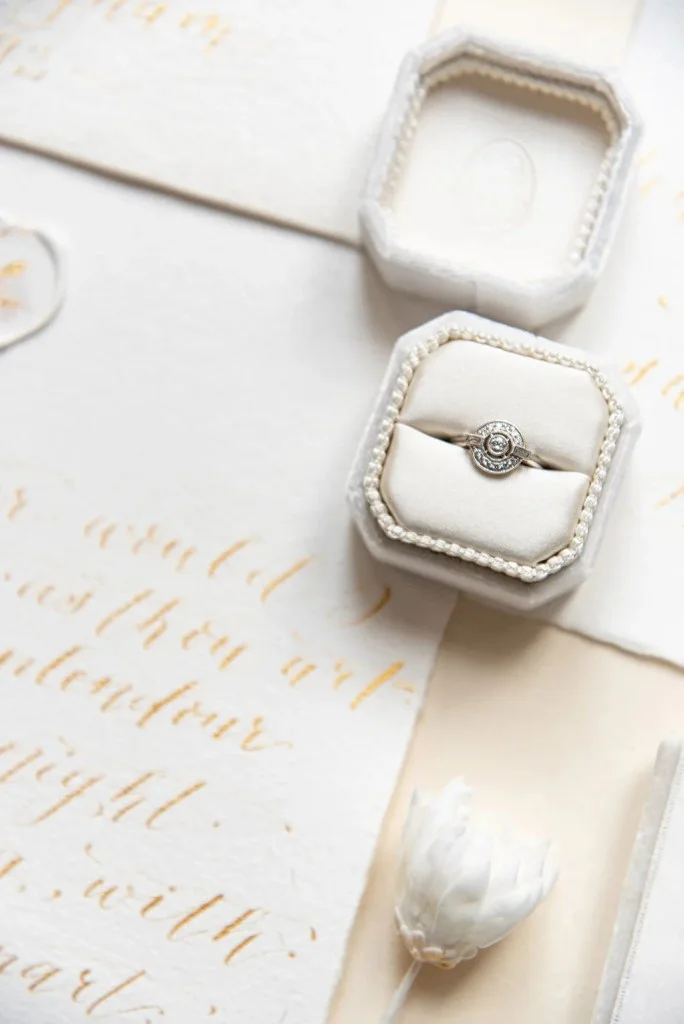
A set budget doesn’t have to mean settling for a ring that feels less personal or striking. The most useful approach is to decide which features matter most, then compare the ways a stone, setting and eventual wedding band can work together. A larger centre stone isn’t the only route to impact, and spending less on one feature may leave room for another you care about more.
Before you start shopping, consider the shape you want and whether you’re open to different gemstones or ring styles. Then use these eight options to guide conversations with jewellers and compare choices within your budget.
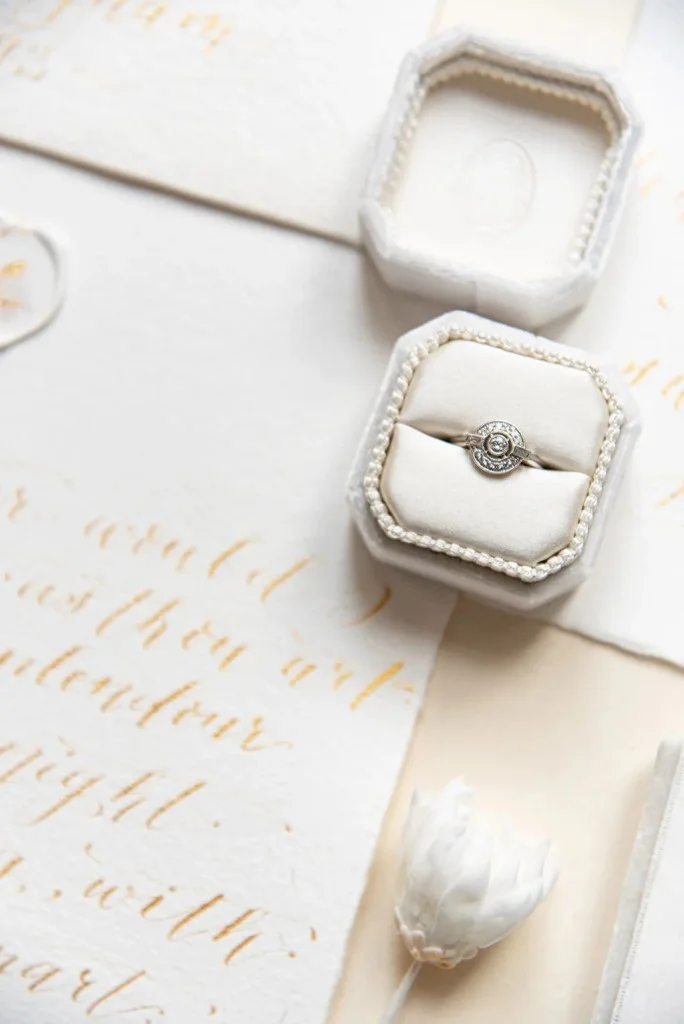
1. Decide which stone qualities matter most
Diamond prices are shaped largely by the four Cs: carat, cut, colour and clarity. Rather than trying to maximise all four, choose one or two priorities and stay flexible on the others. For example, you might favour a smaller stone with strong clarity and sparkle, or choose a larger stone with lower clarity.
Price can jump at full- and half-carat weights, so ask to compare stones just below those thresholds as well as stones at the more familiar sizes. The difference in appearance may be less significant than the difference in cost. If you already know the shape you like, start there: cut preference can help narrow the field before you compare other qualities.
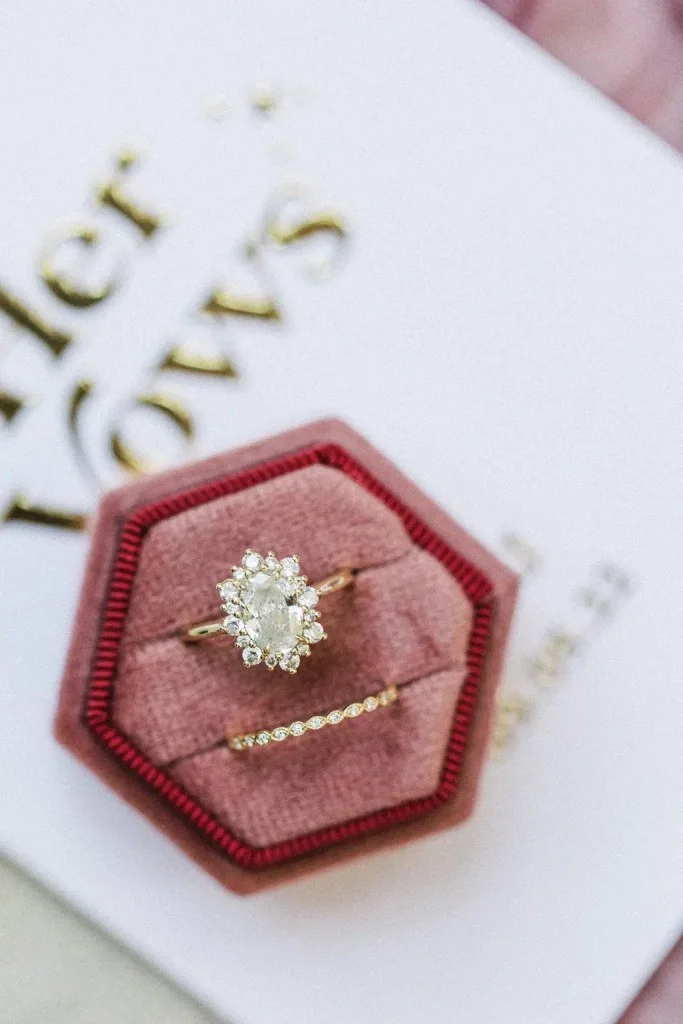
2. Consider the metal before settling on a design
Metal choice can also affect the price. White, yellow and rose gold tend not to vary too much in cost, while platinum and palladium rings are generally pricier. If a particular design matters more to you than the metal, ask the jeweller whether it can be made in a different option. Comparing the materials early helps keep the overall ring within reach rather than forcing a late change to the stone or setting.
3. Add detail around a smaller centre stone
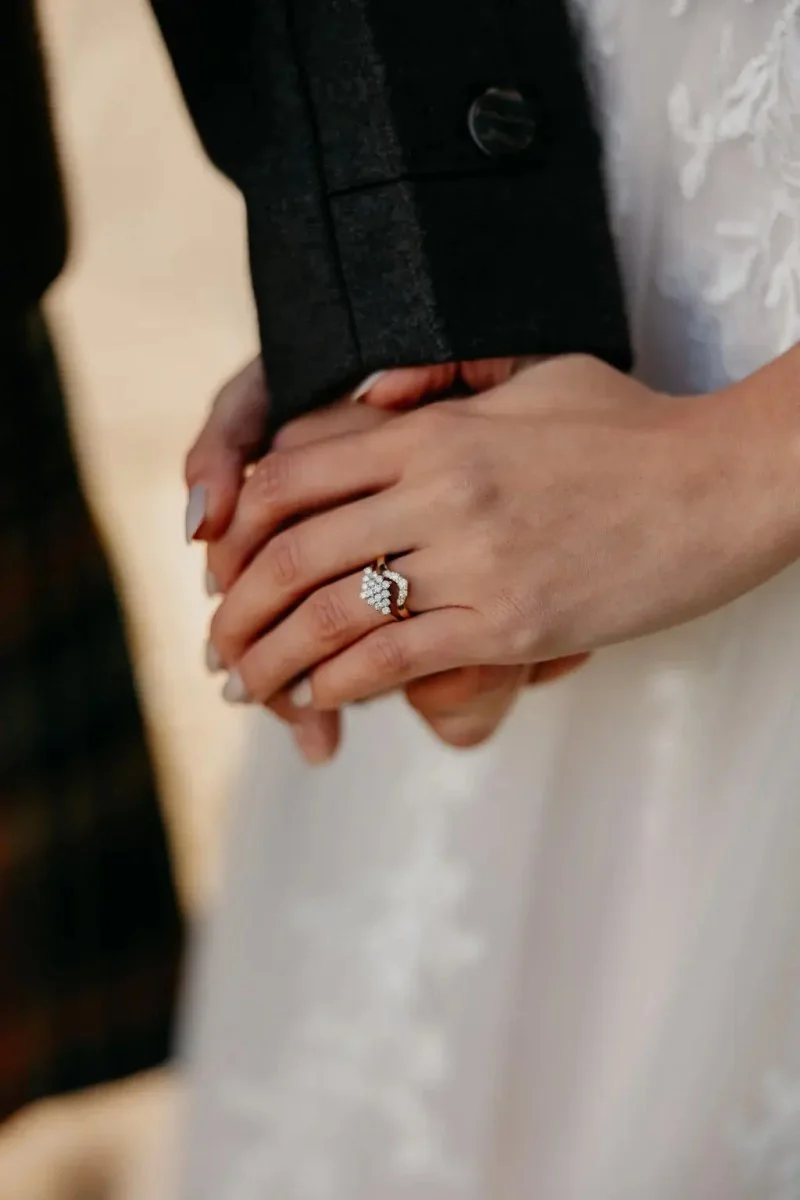
If a solitaire feels too understated but a large centre diamond is outside your budget, a cluster or halo design can give a smaller stone more presence. A halo places a circle of stones around the centre gem, while a cluster groups stones together to create a fuller look. Pavé bands, which have small diamonds or gemstones set into the band, add further sparkle, though they also add to the cost.
Think about the whole ring rather than judging the centre stone on its own. Smaller stones around it can change the overall impression, so compare designs in person if possible and decide whether that added detail is worth the trade-off for you.
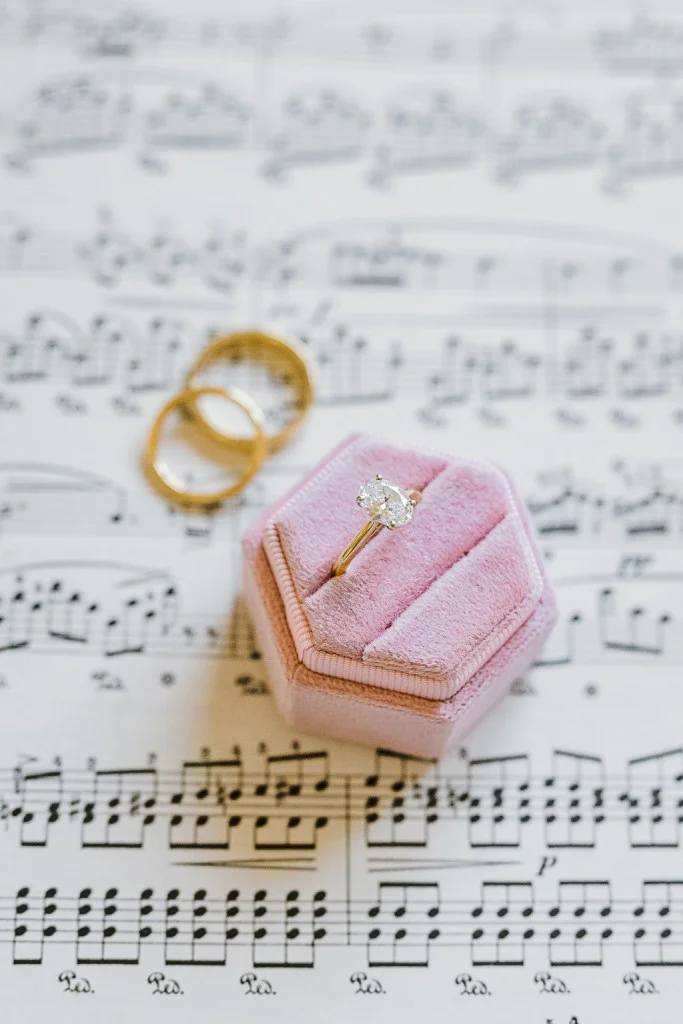
4. Compare settings and cuts for sparkle
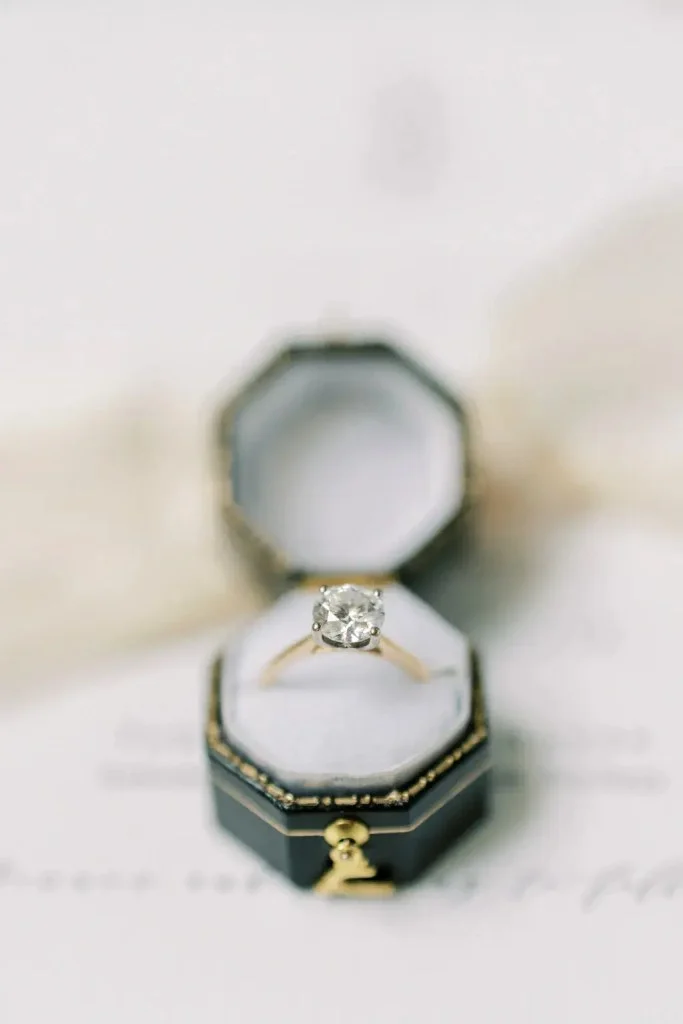
Setting and cut affect how a diamond catches light. In general, less metal surrounding a stone allows more light to enter. A four-claw, high setting is one option that lets in light while holding the gem securely. The number of facets matters too: a round brilliant cut tends to look sparklier than an emerald or asscher cut.
These are useful comparisons, not rules about which ring is best. If you prefer the clean lines of an emerald cut, for instance, that may matter more than choosing the shape with the most sparkle. Ask to view different cuts and settings side by side, and consider how the design looks to you rather than relying on a description alone. For more shapes, see this Guide to Every Gemstone Cut and Shape.
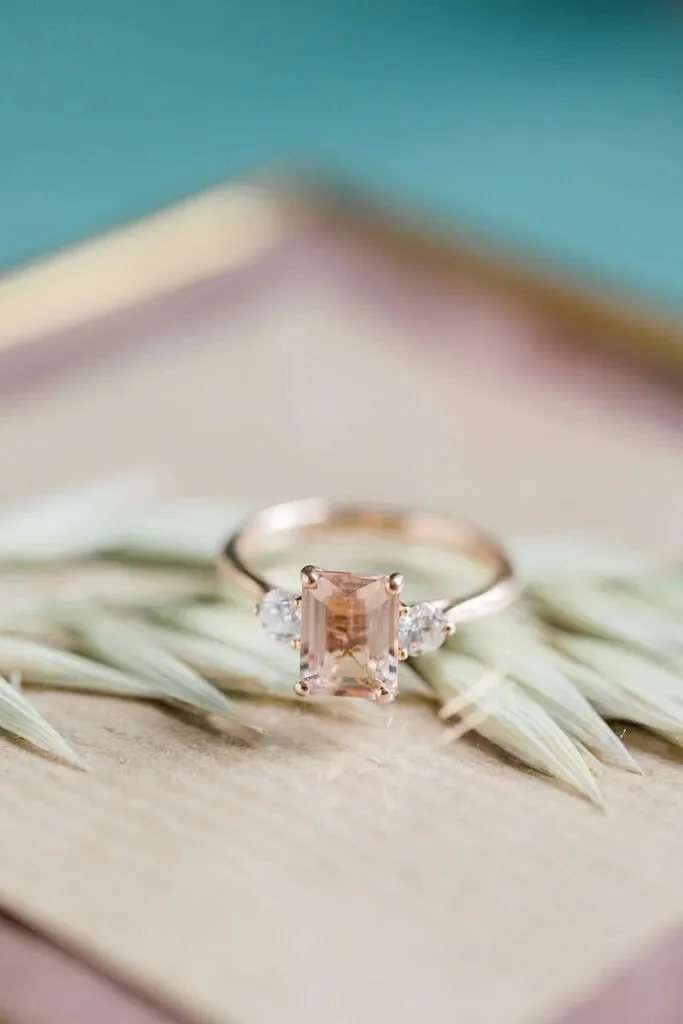
5. Look beyond diamonds
If a diamond isn’t a must-have, other gemstones can open up more options at a given budget. White sapphires are described as nearly as clear as diamonds and similarly durable and precious, while costing a fraction of the price. Moissanites are lab-created gemstones known for their sparkle and are increasingly popular in engagement rings. Both can be worth considering if you want a higher-carat stone.
For couples drawn to colour, morganite, emeralds, grey diamonds, garnets and blue sapphires are also possibilities. The right choice depends on the look you want and how you feel about wearing a particular gem every day. Bring your preferences to the jeweller and compare suitable options rather than assuming the traditional stone is your only choice. See more ideas in this guide to alternative gemstones for engagement rings.
6. Compare sellers, including vintage options
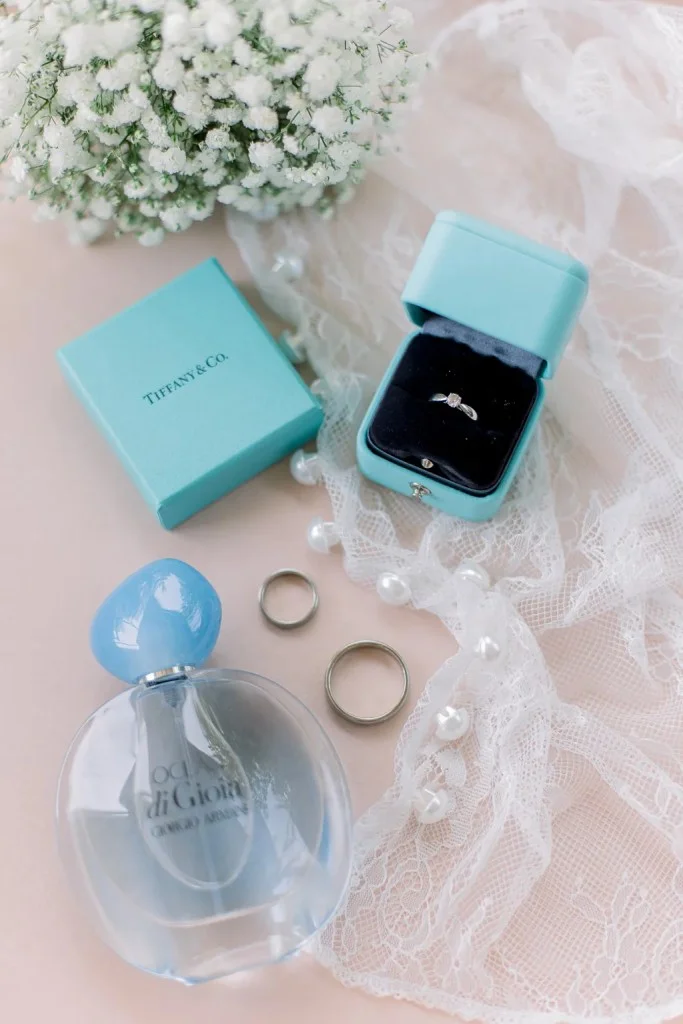
Similar-looking rings can carry different prices at different jewellers. The core price of comparable-quality gemstones and precious metals shouldn’t vary too much, but some of the cost may reflect a brand name or presentation. A well-regarded jeweller may also offer sustainably sourced diamonds and skilled cutting, so price alone doesn’t tell the whole story.
Compare what’s included and ask for certification for any gemstone you buy, as proof of its source and quality. Online sellers and auction houses can widen your search; vintage rings are another route if their style appeals to you. These tips for shopping vintage can help you prepare.
7. Bring your budget to the jeweller
Tell the jeweller what you can spend and what you’re hoping to find. Their product knowledge can help identify combinations of stone, metal and setting that fit both your preferences and your budget. Be specific about what you’re willing to adjust, whether that’s carat weight, clarity, metal or surrounding stones. This gives you a more useful comparison than looking at rings without a clear spending limit.
A custom-made ring may cost more, but it can also be an option if you have a particular design in mind and a fixed budget. Ask for a breakdown of the choices behind the quote, then compare it with ready-made rings. Bespoke isn’t automatically cheaper or more expensive; the design and materials shape the price.
8. Plan for how the wedding band will fit
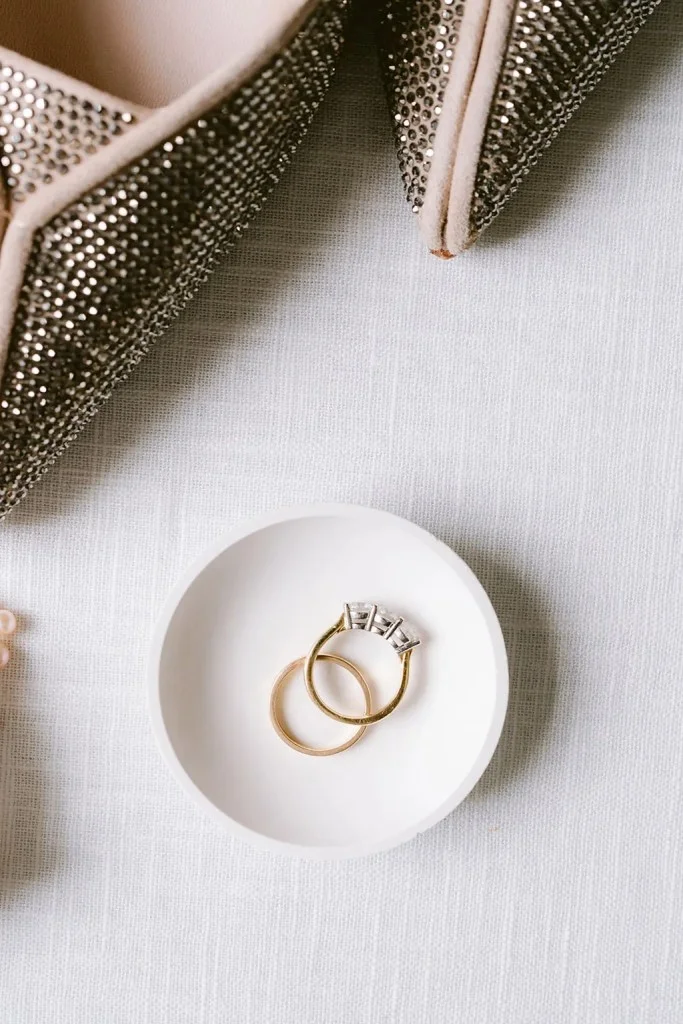
An engagement ring will eventually be worn with a wedding ring, and the pairing can change the overall look. You can also spread the cost across the two purchases. One approach is to put the engagement-ring budget toward a well-made solitaire, then add a curved pavé-style band as a wedding ring to build up the sparkle later.
Another style to consider is a Moi et Toi ring, which pairs two centre stones—for example, a pear shape beside an emerald cut. The stones may also be different gemstones. Whether you choose a single centre stone or a two-stone design, think ahead about how the engagement ring will sit beside a wedding band. That simple planning step can help you spend on the ring you want now while leaving room for the final pairing.
For more guidance on setting a spending limit, read how much you should spend on an engagement ring. The strongest starting point is a clear budget and an honest list of priorities; from there, compare the combinations that make the most sense for you.