Sample No. 0046
A Wedding Dress Reimagined From Both Mothers’ Gowns
Elise and Miguel Ramos brought two family gowns together in one custom dress. Their experience offers practical lessons for planning an heirloom redesign.
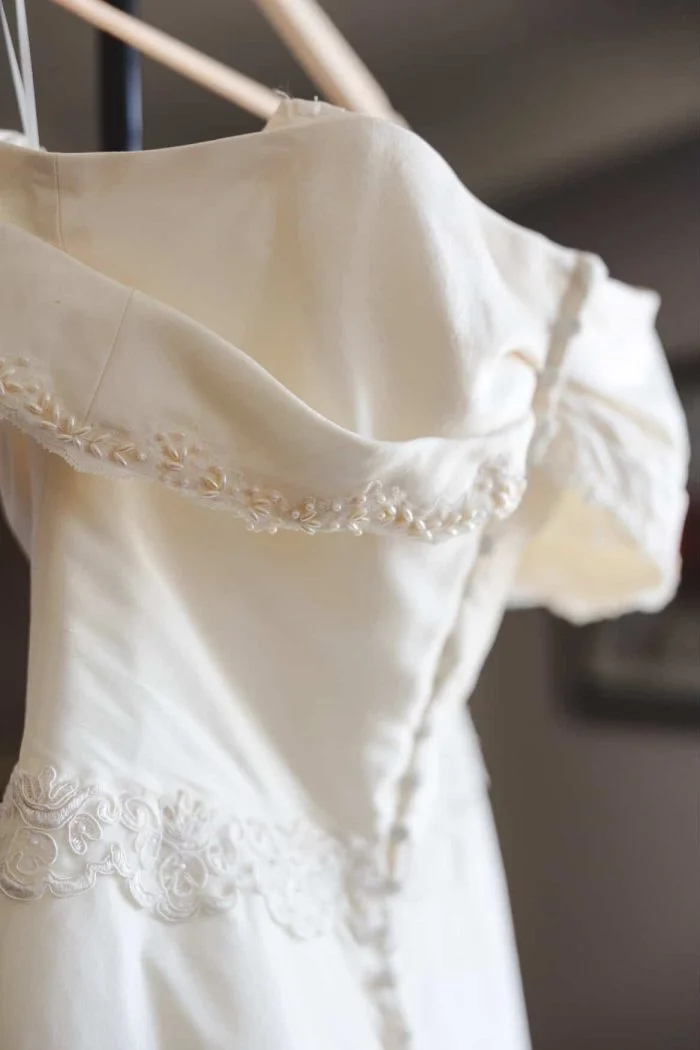
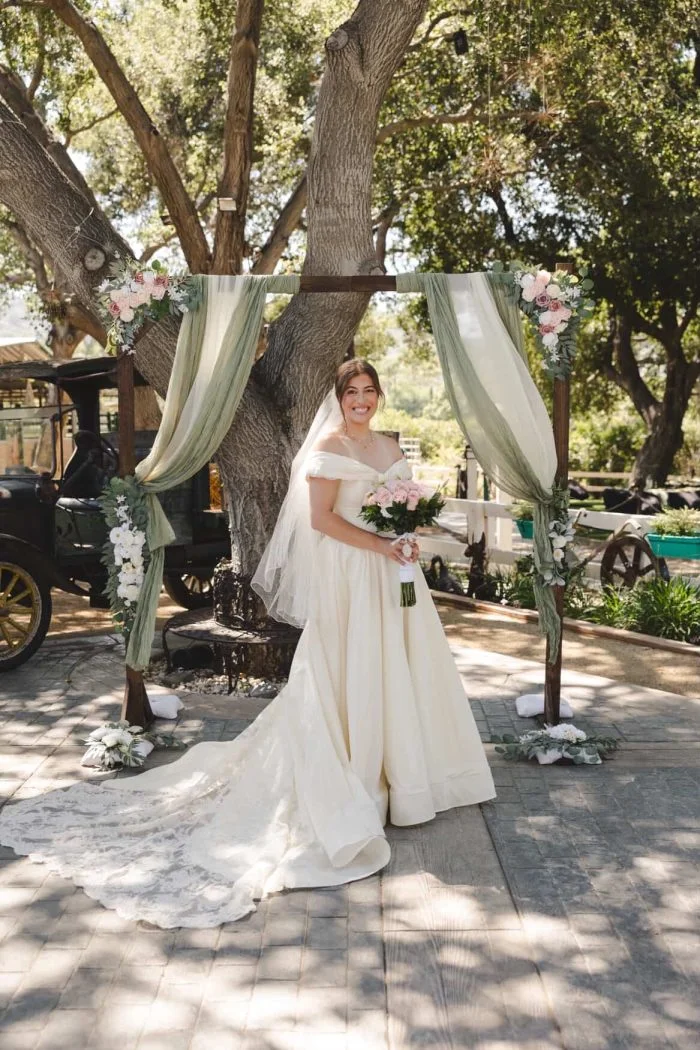
Elise and Miguel Ramos’s wedding dress carried two family histories into one ceremony. Made from gowns belonging to both mothers, it joined cream satin, pearl detailing and vintage lace in a single custom design. The result depended on more than careful sewing: Elise and her designer had to assess the fabrics, decide how each gown could be used and work through the choices over multiple meetings.
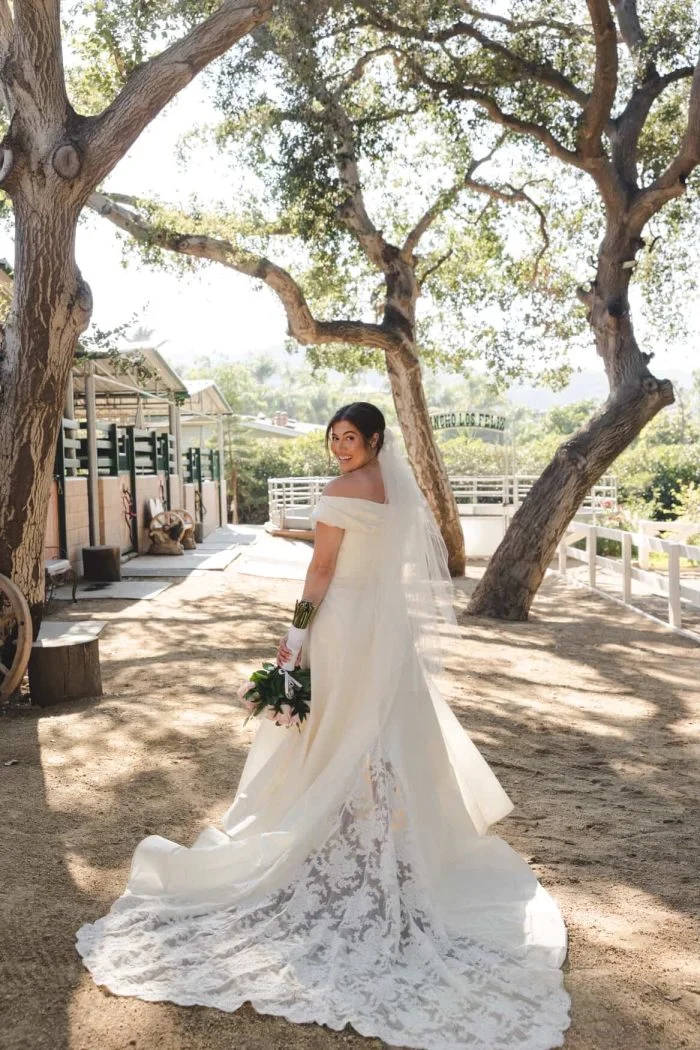
The couple married on July 12, 2025, at Rancho Los Felix in Whittier, California. Their outdoor setting included oak trees and horses in a nearby field. Elise teaches, and Miguel is a behavior therapist; the day’s emphasis on family connection came through in the way she shared the story behind her dress.
Two gowns, one design
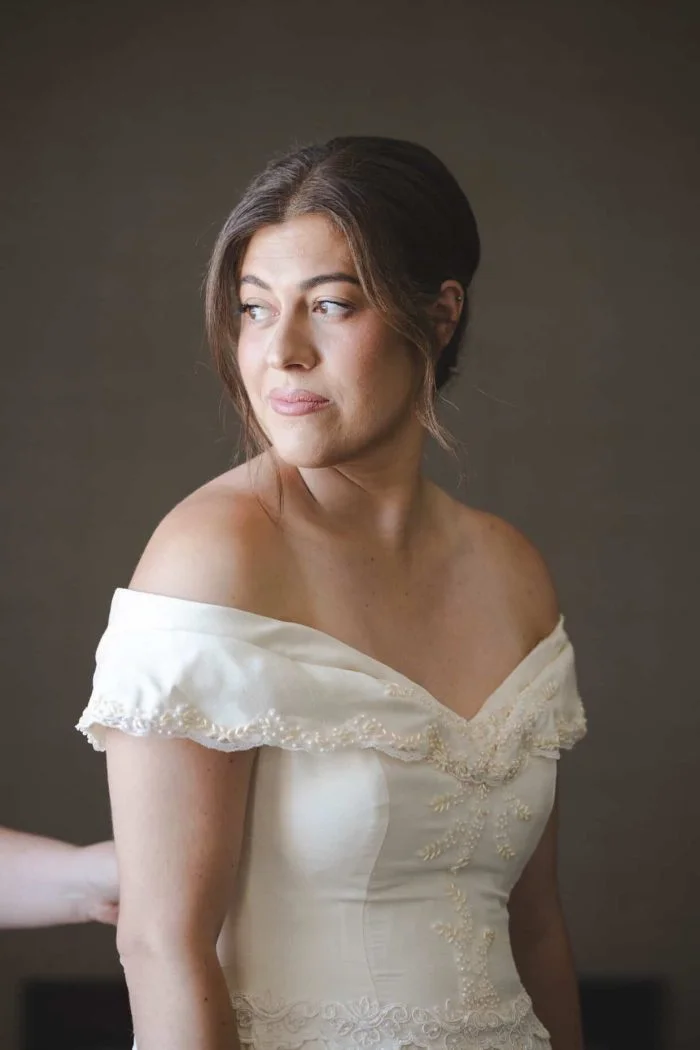
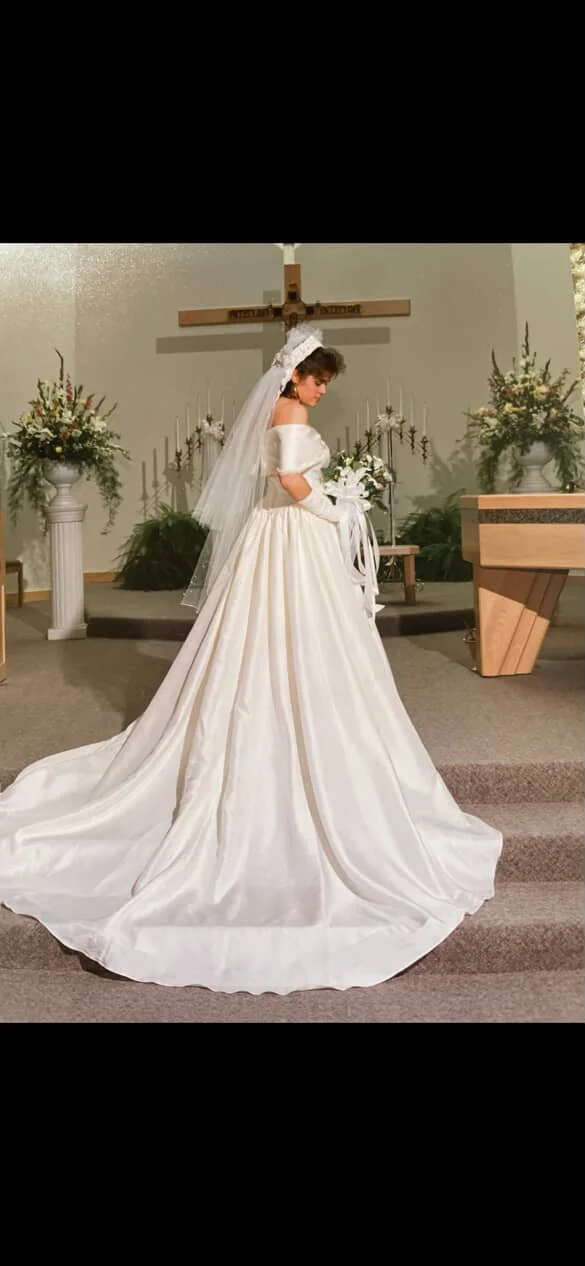
Elise had long admired her mother’s cream satin wedding gown from the early 1990s. Its pearl detailing framed the neckline, and it provided the foundation for the new dress. Her mother-in-law’s gown brought a second set of materials into the design. Elise said she wasn’t sure what condition it was in when she first considered including it, and felt honored when her mother-in-law offered it.
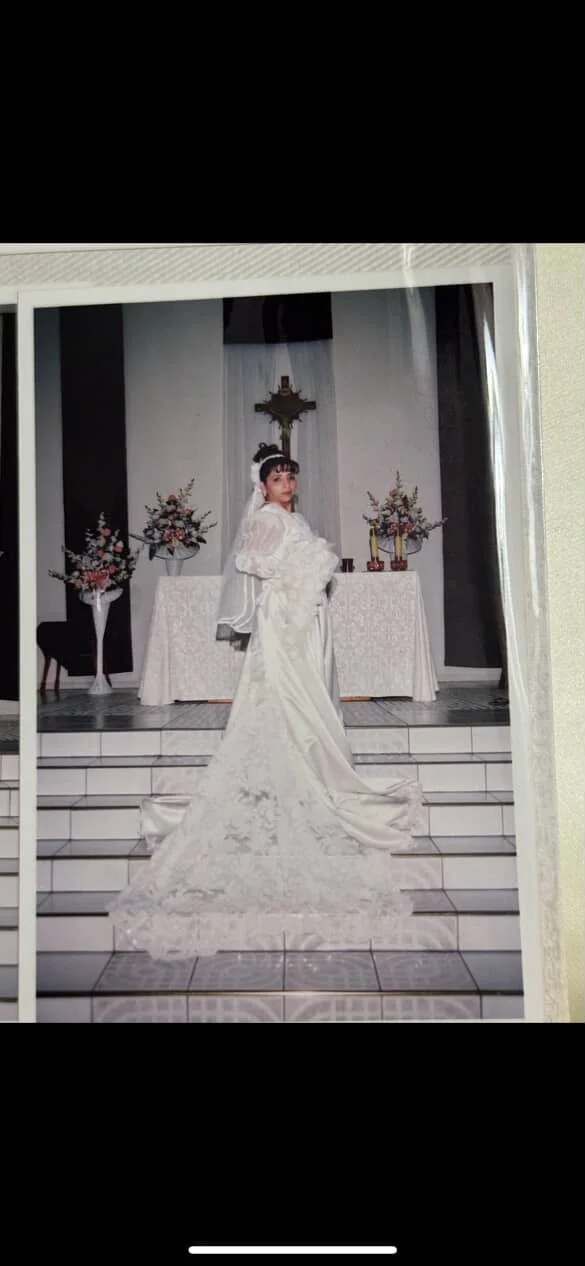
Turning both garments into one dress meant making decisions about which parts could be reused and how they would work together. Elise brought the gowns to Folklore Dress Studio. She and the designer met many times to review construction, beading, shape and the strength of the materials. Their consultations helped establish what could carry the structure of the new gown and what might not withstand being moved.
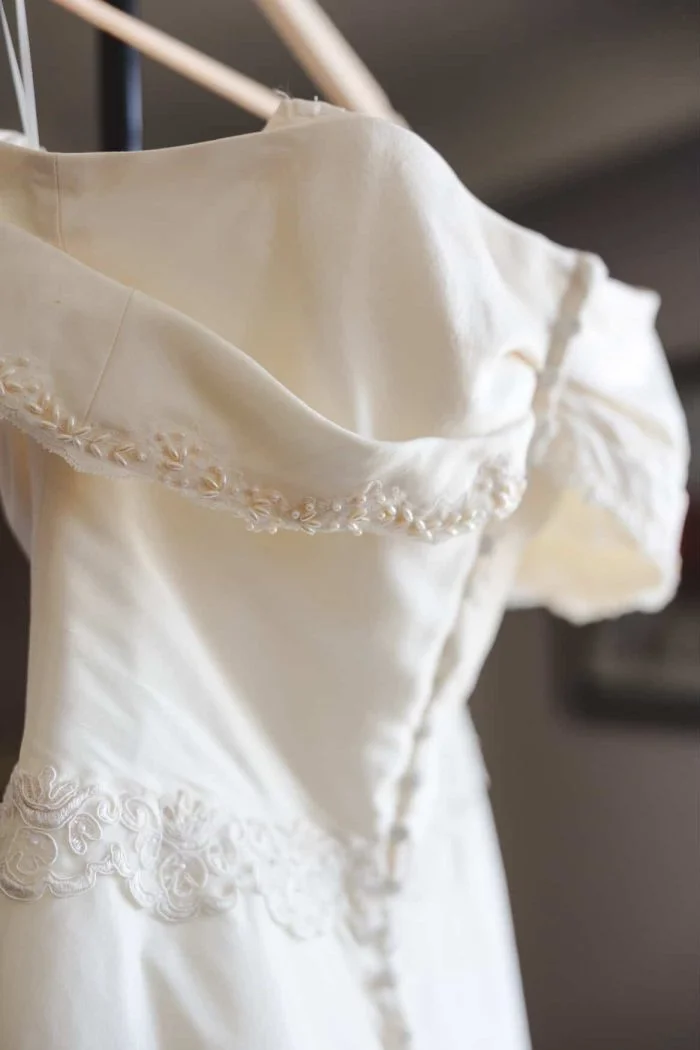
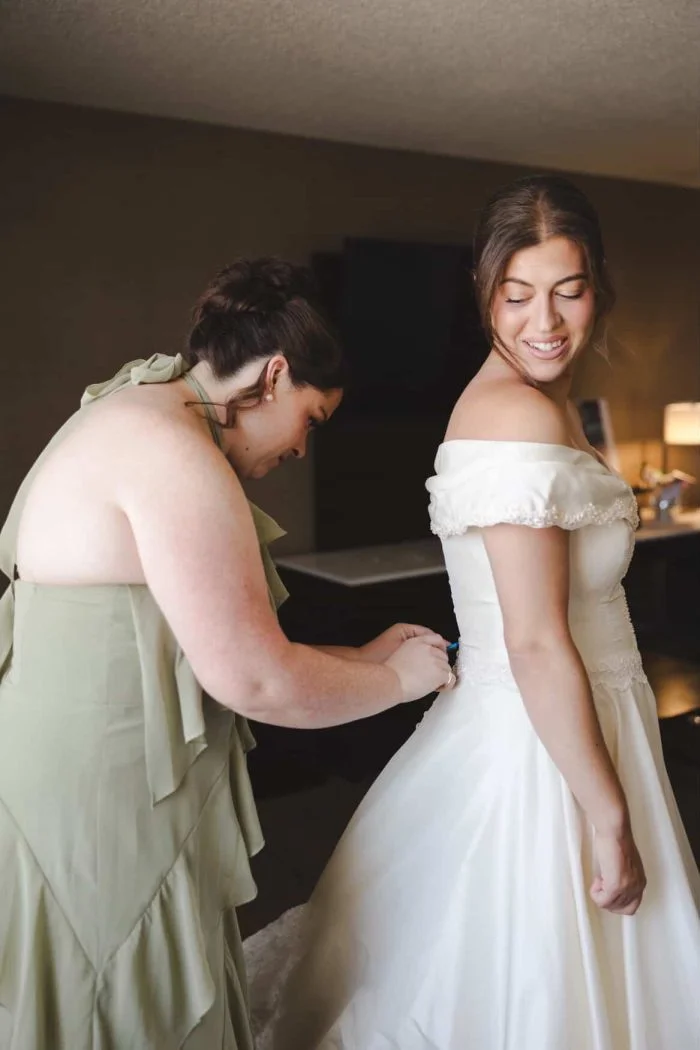
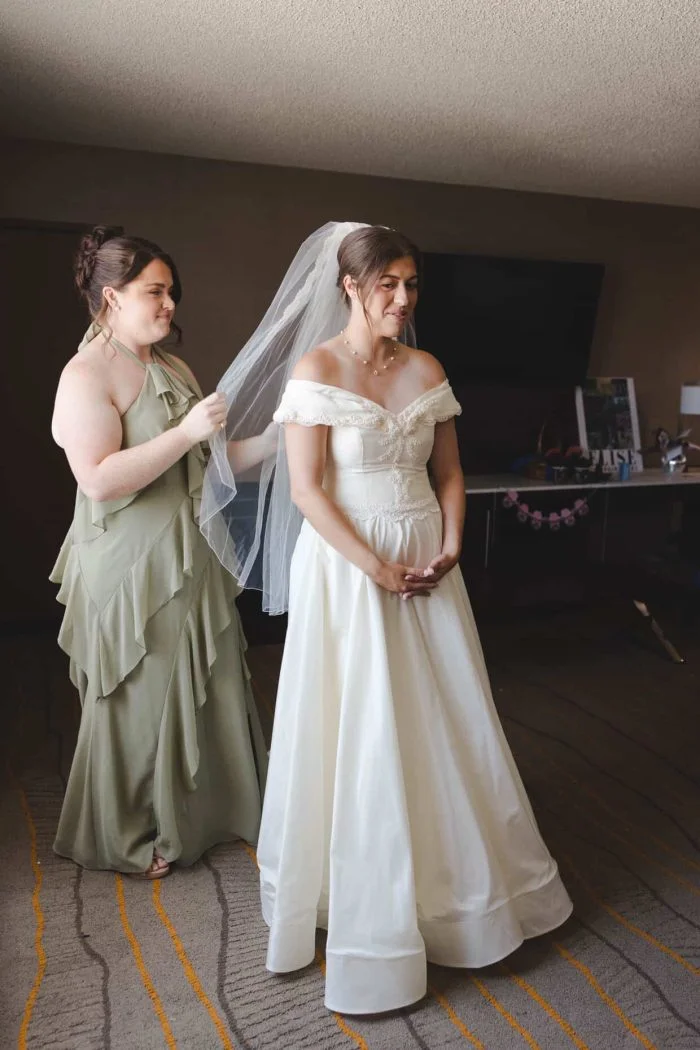
Her mother’s satin became the base and the full off-the-shoulder bodice, with its original pearls kept at the neckline. The lace from her mother-in-law’s gown formed the skirt’s lower portion and train. Smaller details were woven across the design: lace appeared at the waist, while original satin continued to provide support beneath the skirt. Both gowns contributed to both areas of the finished piece, rather than being divided into separate halves.
Elise completed the look with her mother’s veil. Together, the gown and veil made the family connection visible while keeping the original garments’ materials and details at the center.
A tribute shared as she walked
Elise chose to explain the gown during the ceremony. As she walked down the aisle, guests heard a recording in her own voice describing the dress and naming the contributions of her mother and mother-in-law. She said the message expressed gratitude and celebrated the women who helped shape the love that brought her to that moment.
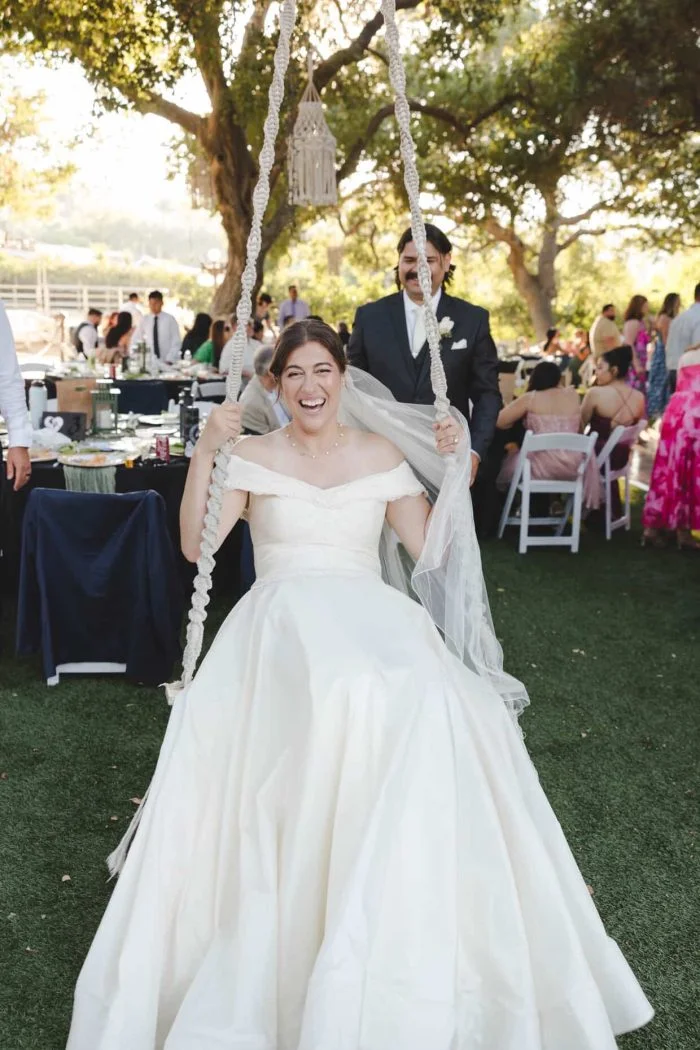
The audio let guests understand the meaning of the dress as they saw it, and drew attention to both mothers during Elise’s entrance. The same focus on connection appeared in a photograph by Heather Wang: Elise laughing on a macramé swing beneath an oak tree, with Miguel behind her and the reception tables visible in the background.
Planning an heirloom redesign
For couples considering a similar project, Elise’s experience points to a practical order of operations:
- Check the garments’ condition first. The state of the fabric will affect which parts can be used and how the new design can be built. Elise didn’t know the condition of her mother-in-law’s gown until she asked, and that information helped shape the plan.
- Start early and expect several meetings. The process combined design conversations, construction decisions and fittings. Elise met with the designer repeatedly, giving them time to assess the garments and refine how the pieces would fit together.
- Choose a designer prepared to work with the materials. Combining older gowns can involve different fabrics, construction and detailing. Elise worked with Folklore Dress Studio, which took on the challenge of incorporating the lace train and satin structure.
- Decide how you want to share the story. Elise used an audio message during her aisle walk to tell guests what the gown meant. Couples can choose a different way to acknowledge family contributions, but sharing the context can help relatives and guests understand the choices behind the finished dress.
The couple’s custom gown brought their mothers’ wedding garments into a new family celebration while preserving recognizable details from each. The design shows how a careful assessment and repeated collaboration can turn two heirlooms into one wearable tribute.
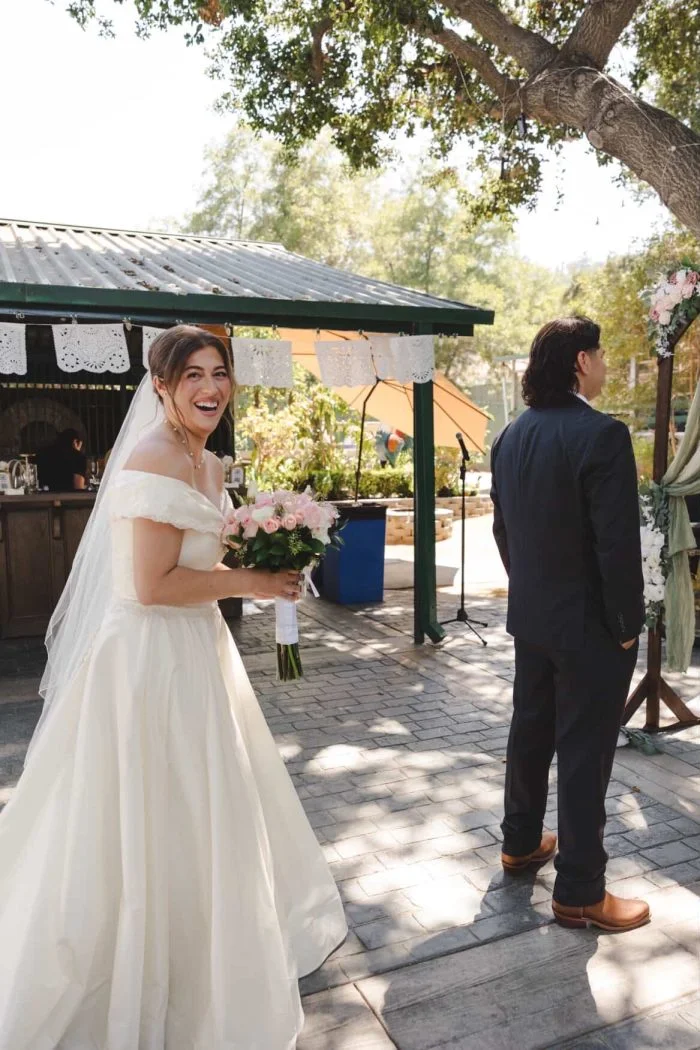
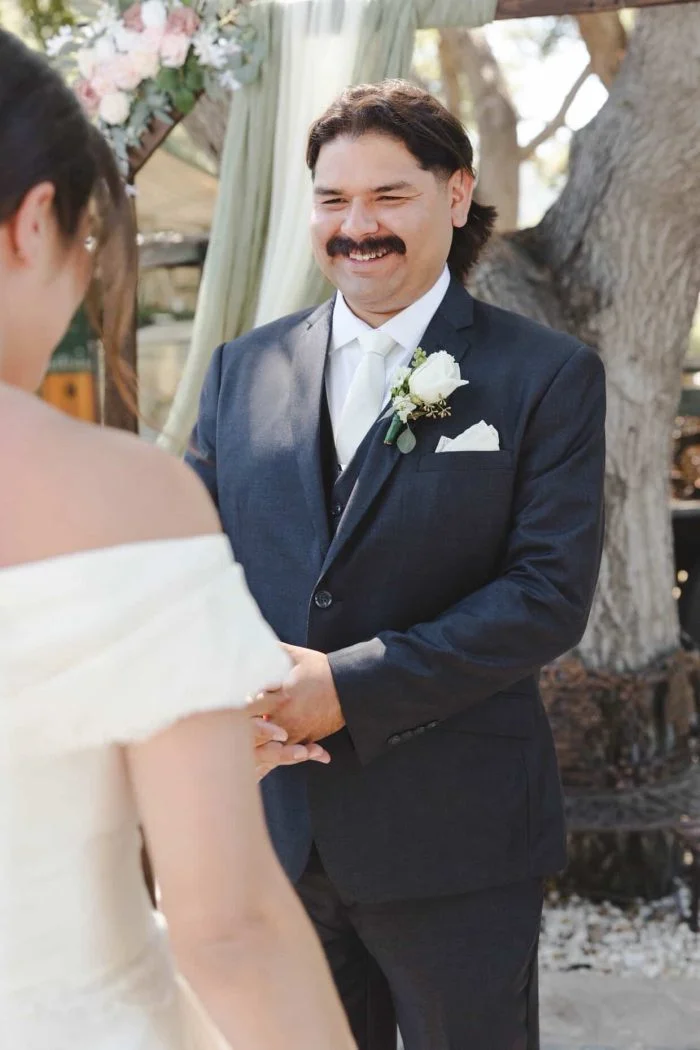
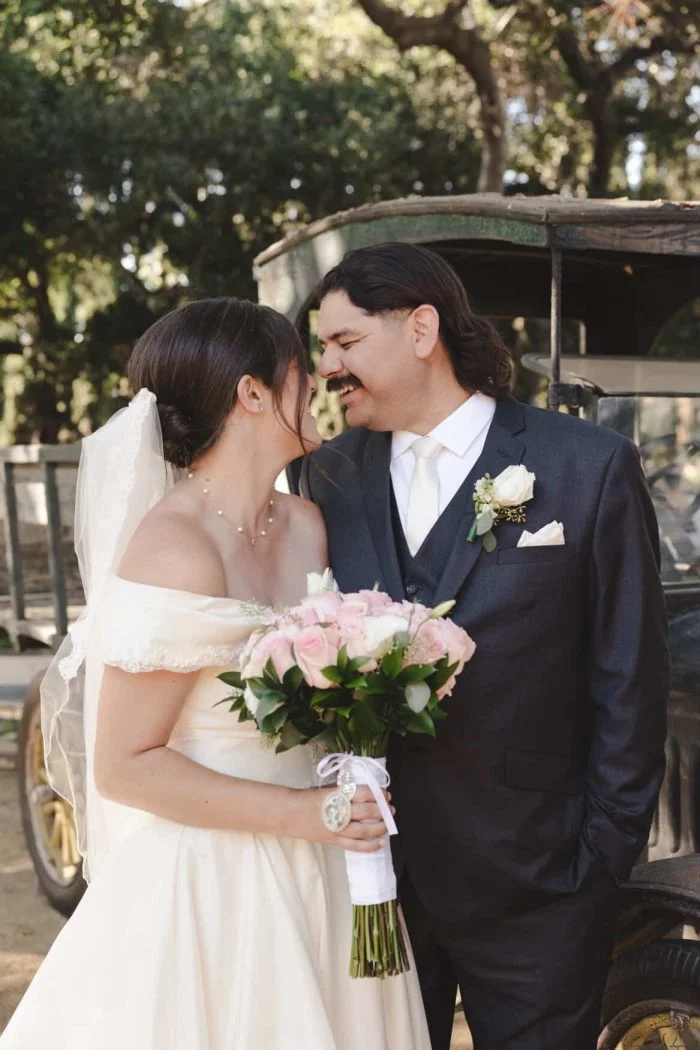
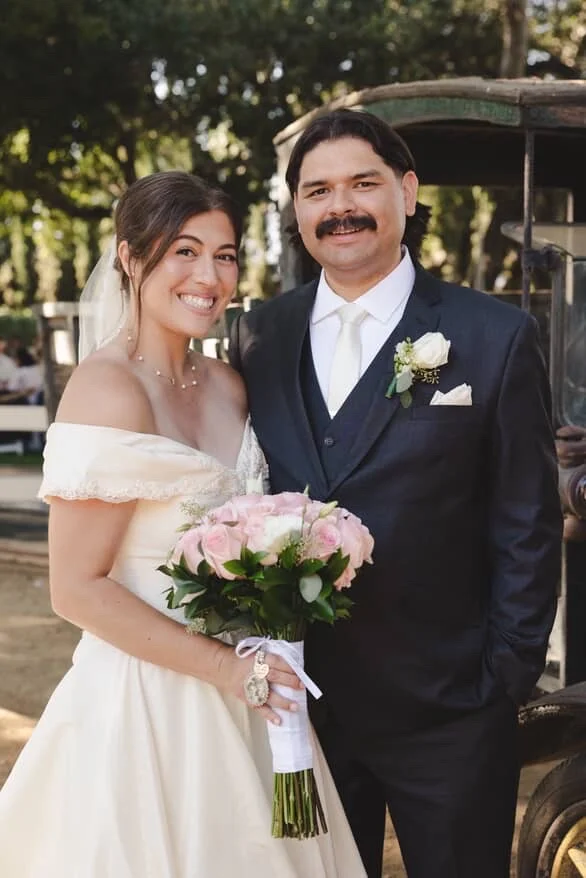
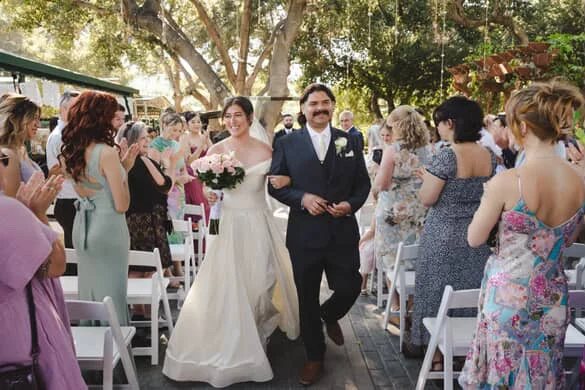
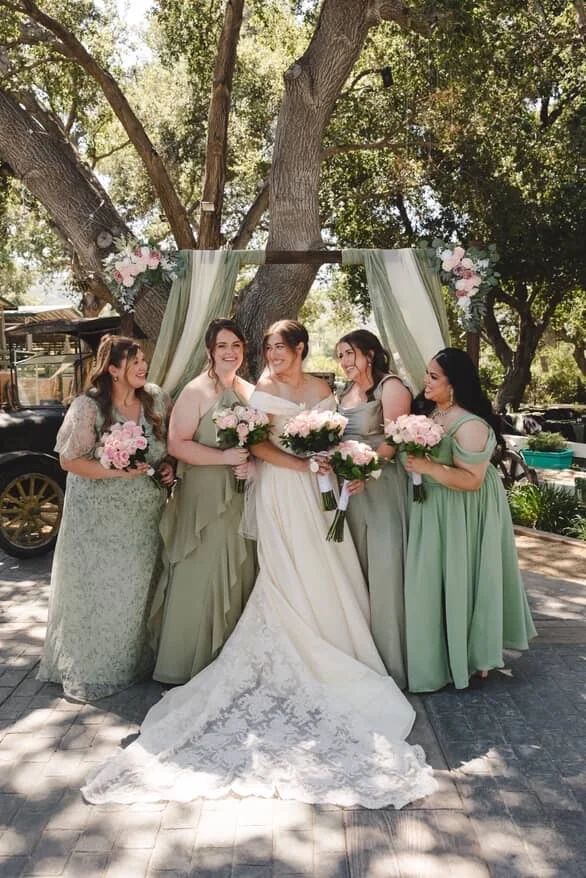
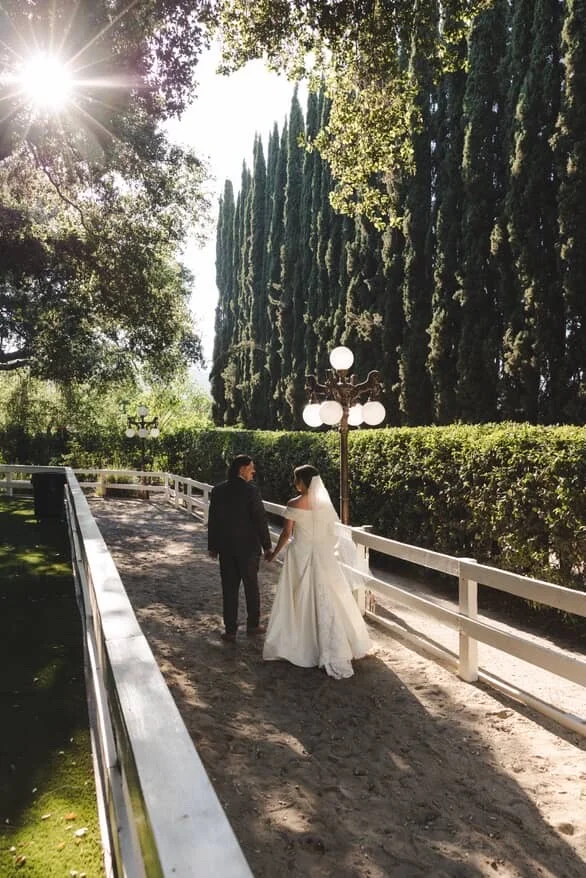
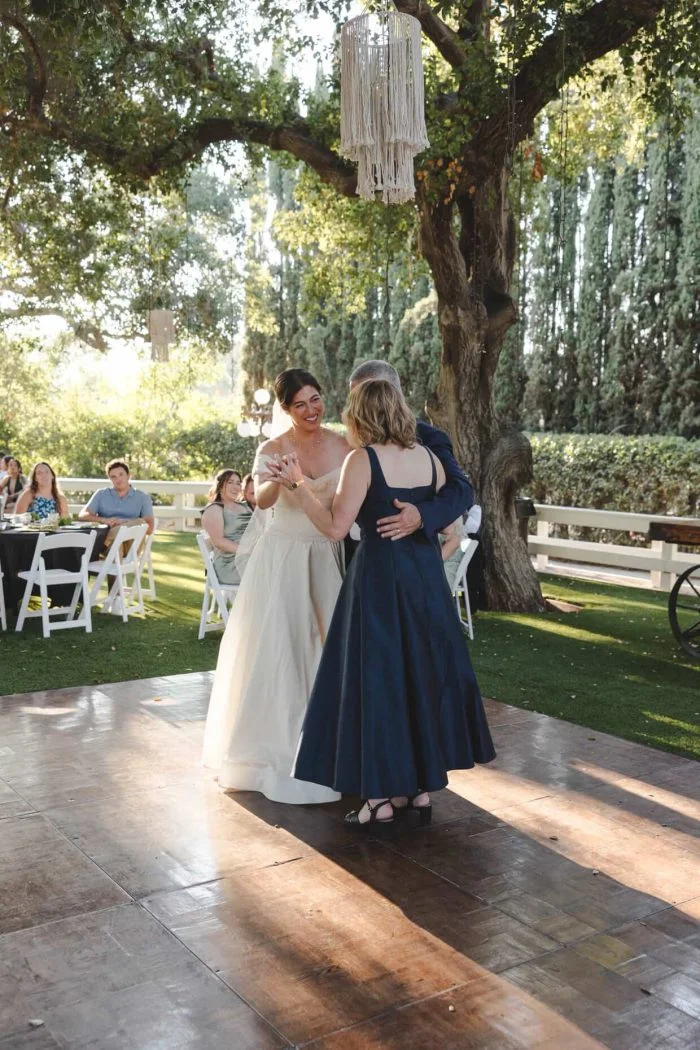
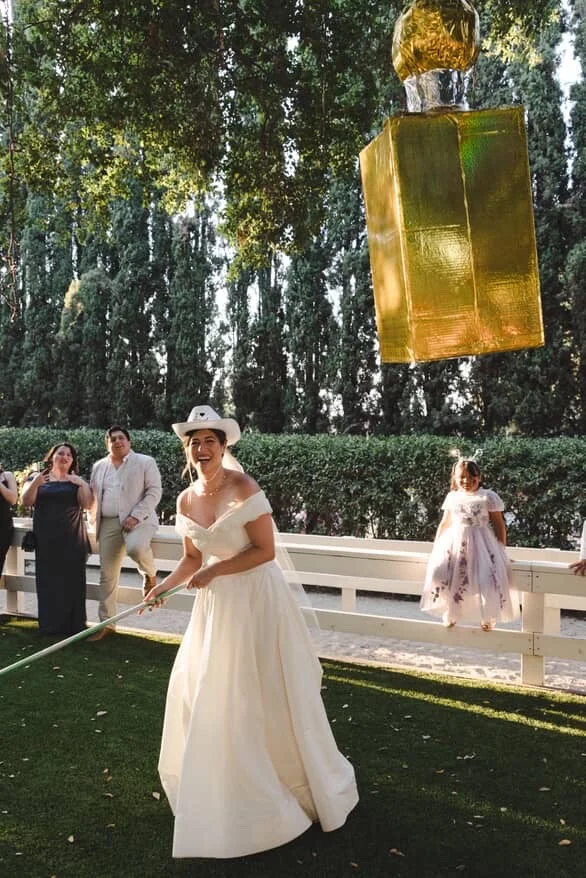
Wedding details: Elise and Miguel Ramos married July 12, 2025, at Rancho Los Felix in Whittier, California. Heather Wang photographed the day, and Folklore Dress Studio designed the gown using Elise’s mother’s early-1990s cream satin dress and her mother-in-law’s lace gown.
Learn more about horses, satin gowns and vintage lace.