Sample No. 0032
12 Premium Hindu Wedding Invitation Styles for Every Celebration
Compare 12 Hindu wedding invitation styles, from royal boxes and scrolls to acrylic and layered sets, with practical tips for choosing materials and details.
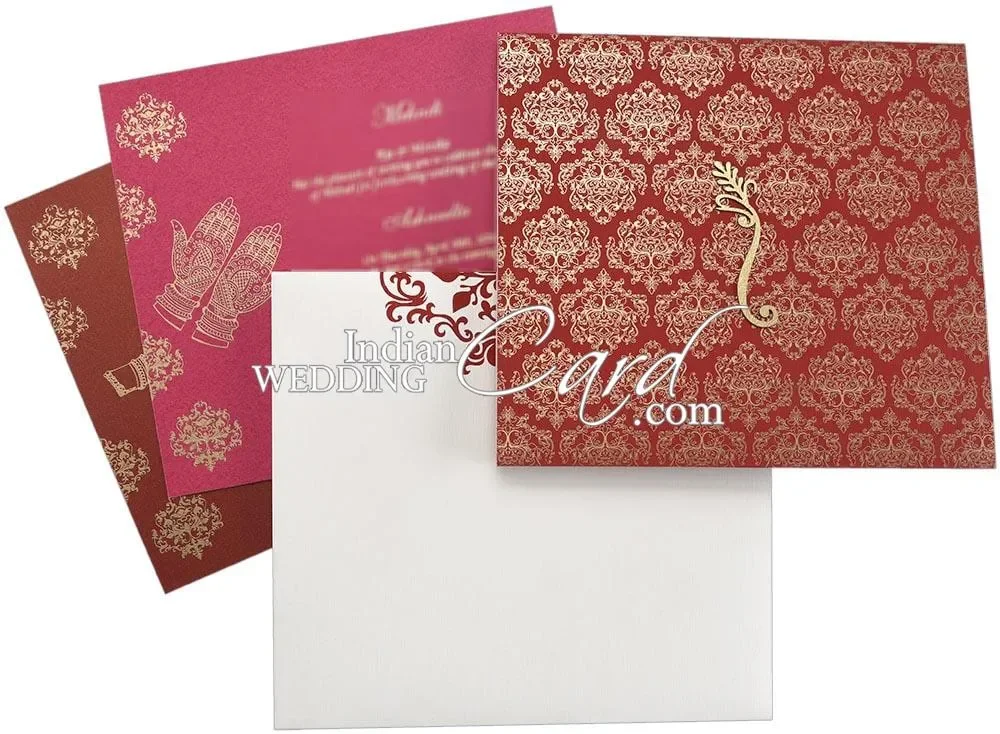
A wedding invitation can introduce the look and feel of a Hindu celebration before guests arrive. Premium designs range from ornate, traditional formats to modern materials, and the right choice depends on the couple’s style, the event’s scale and the information guests need. Fabric, metallic finishes, resham thread embroidery and carefully chosen paper can all add texture and visual presence; thoughtful customization makes the invitation feel personal rather than simply formal.

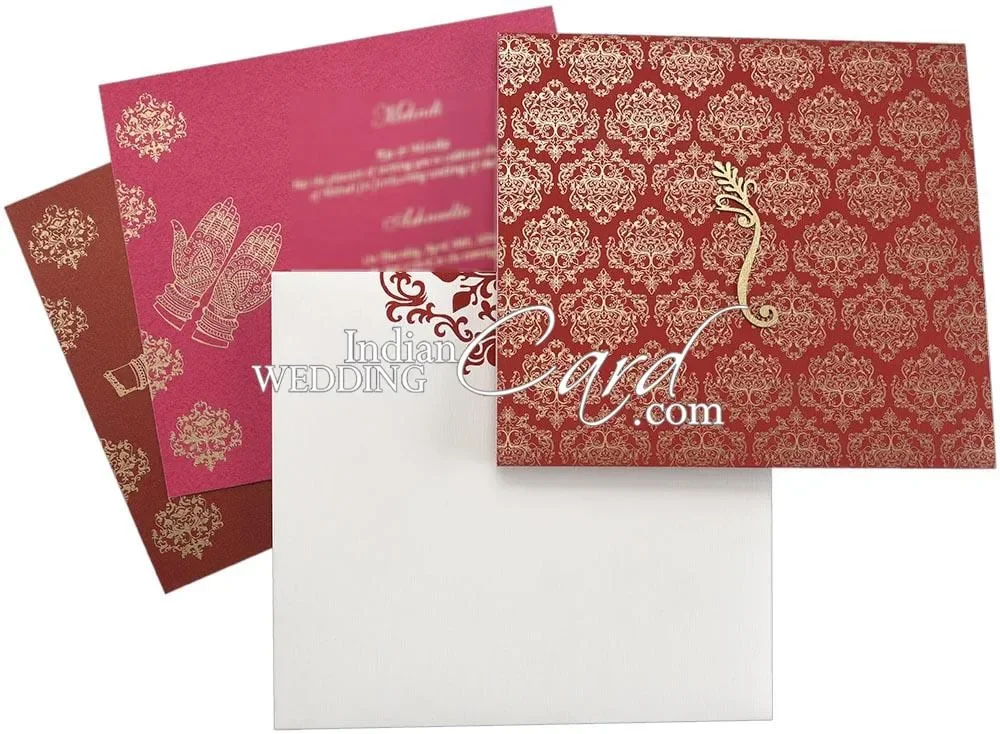
Luxury needn’t mean one particular format. Royal boxes and velvet covers make a statement through presentation, while laser-cut patterns and foil details bring definition to a flat card. Acrylic offers a more contemporary finish, and floral designs can feel lighter and softer. The comparison below groups popular formats by the occasions they may suit; treat the ratings as a rough guide to style, not a measure of quality.
At a glance: six invitation formats
| Style | Often suited to | Luxury level | Traditional appeal |
|---|---|---|---|
| Royal box | Grand weddings | ★★★★★ | ★★★★★ |
| Laser cut | Elegant ceremonies | ★★★★★ | ★★★★☆ |
| Acrylic | Modern luxury | ★★★★★ | ★★★☆☆ |
| Scroll | Royal themes | ★★★★★ | ★★★★★ |
| Velvet | Premium weddings | ★★★★★ | ★★★★★ |
| Foil printed | Classic celebrations | ★★★★☆ | ★★★★★ |
Presentation-led designs
Royal box invitations are built around the unboxing: a card arrives in a decorative box, sometimes accompanied by sweets, dry fruits or personalized gifts. They’re a natural match for palace weddings, luxury celebrations and high-profile events. Consider what will go inside the box as well as the printed invitation, since both contribute to the guest’s first impression.
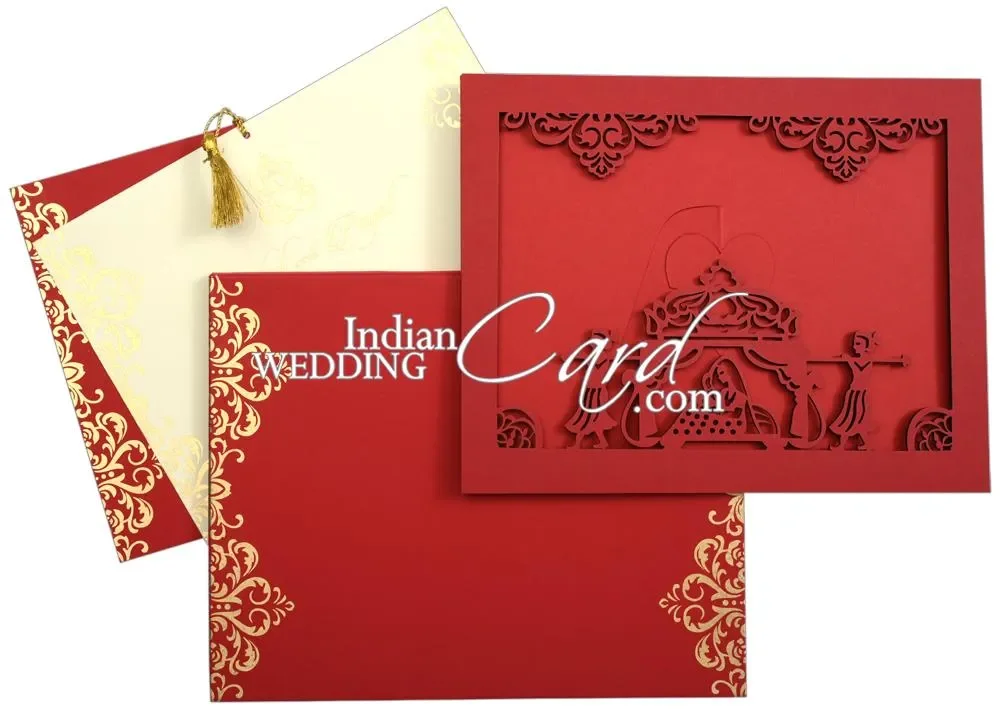
Velvet invitations pair a soft, rich cover with details such as gold foil printing. Their appeal rests as much on touch as on appearance: velvet, foil and a refined finish create a particularly formal presentation.
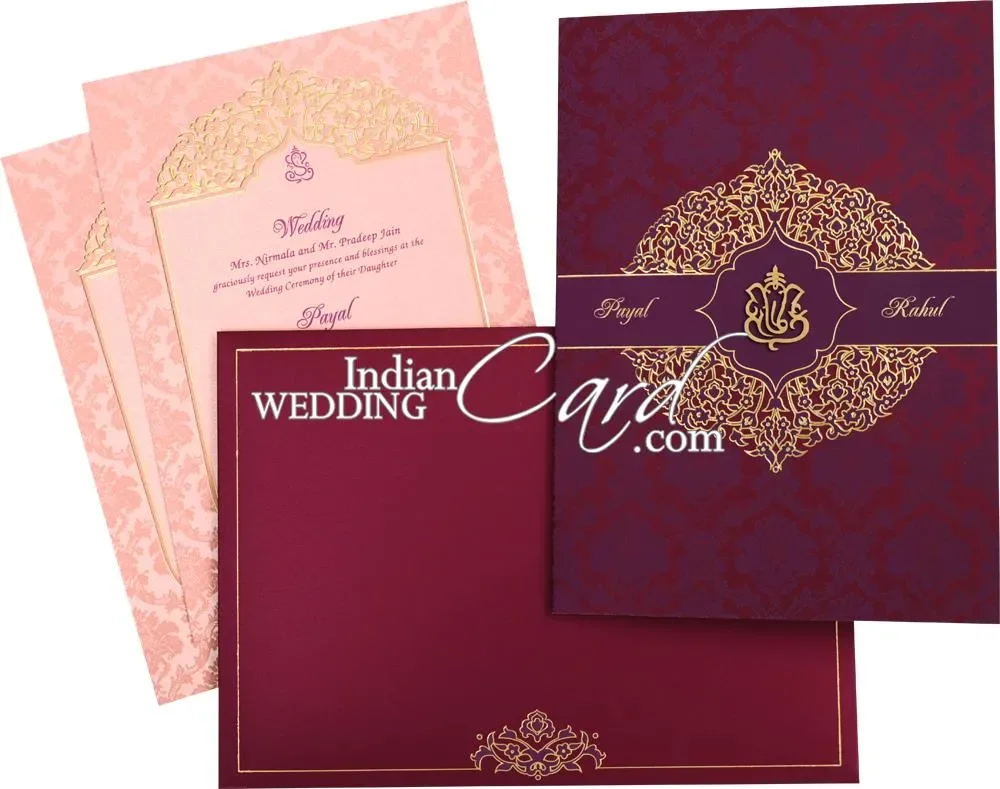
Scroll invitations draw on royal Indian heritage and are often placed in embellished boxes. Silk, velvet and handmade paper are among the materials used. This format suits couples drawn to a traditional look and a ceremonial presentation.
Pattern, print and material
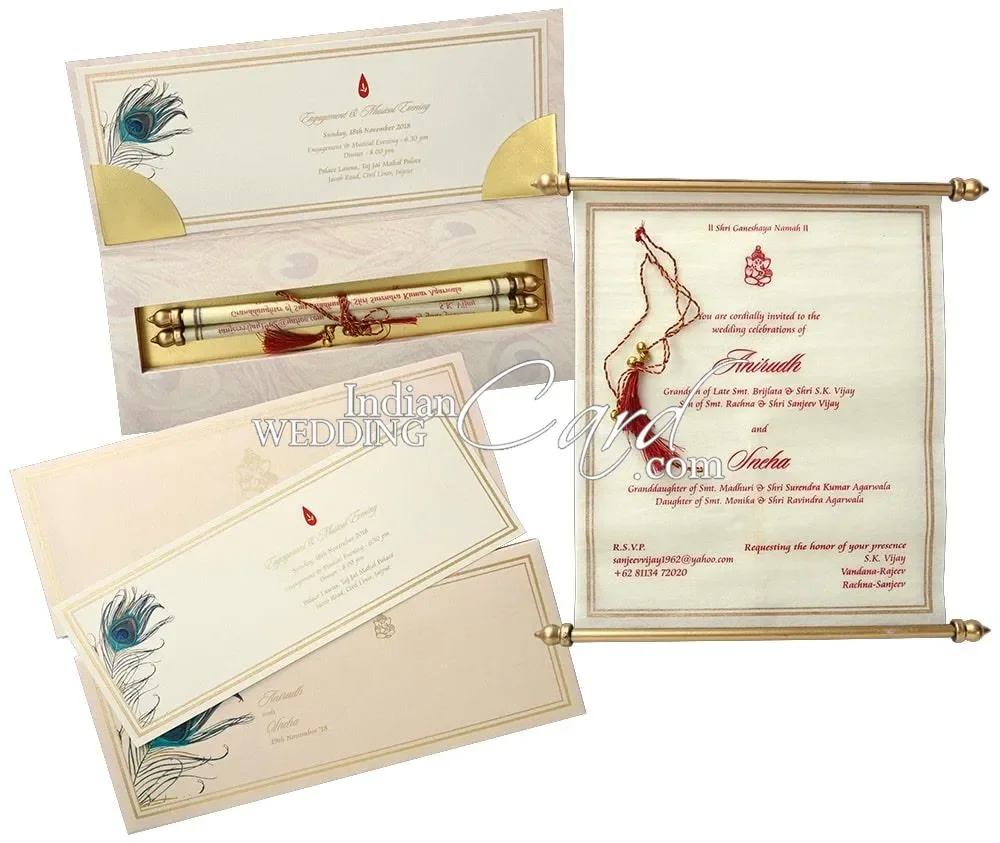
Laser-cut invitations use precise cutwork to create designs such as mandalas, flowers and temple motifs. The detailed finish makes them a fit for traditional weddings, luxury receptions and couples seeking a designer look.
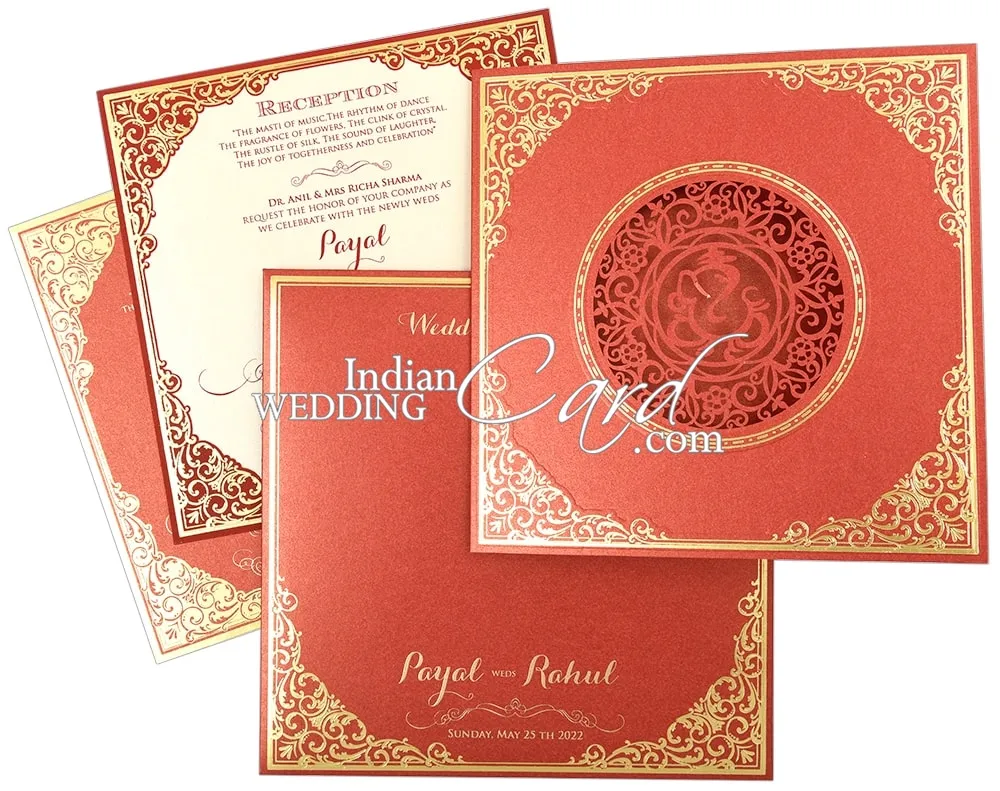
Acrylic invitations shift the material while leaving room for traditional imagery. Designs may use UV printing, foil, or a mix of both, balancing a contemporary surface with familiar motifs. They’re suggested for destination weddings, luxury celebrations and modern Hindu weddings.
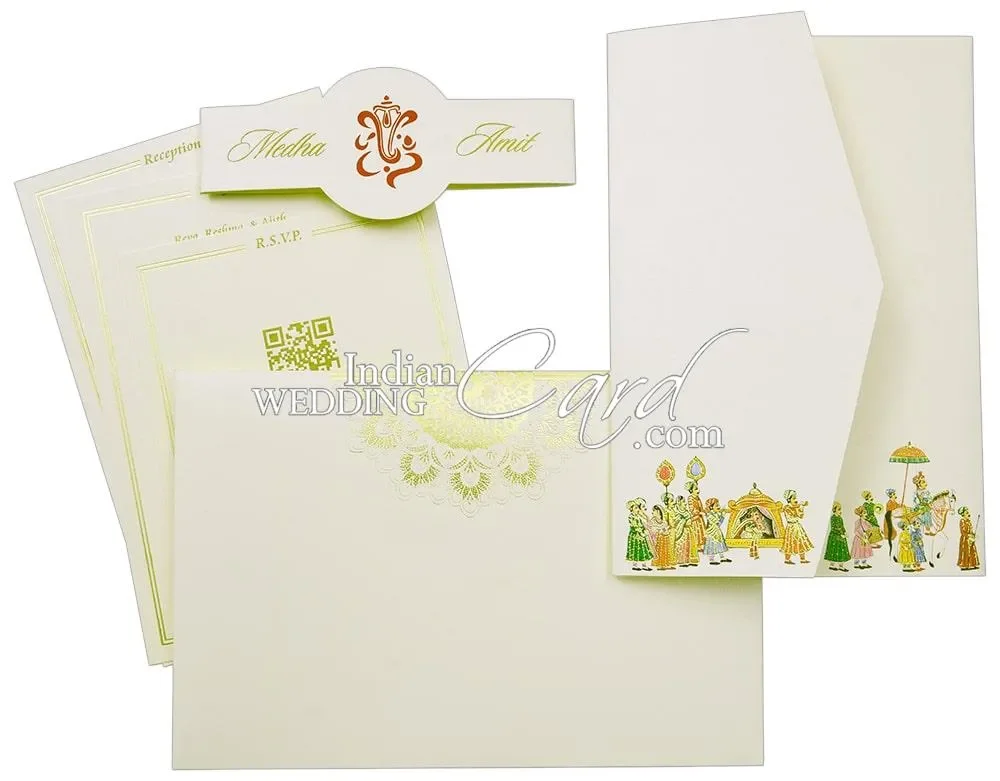
Foil-printed invitations use metallic stamping in shades such as copper gold, silver or rose gold. Foil can highlight typography and lend the card a polished finish without requiring a box or unusual material.

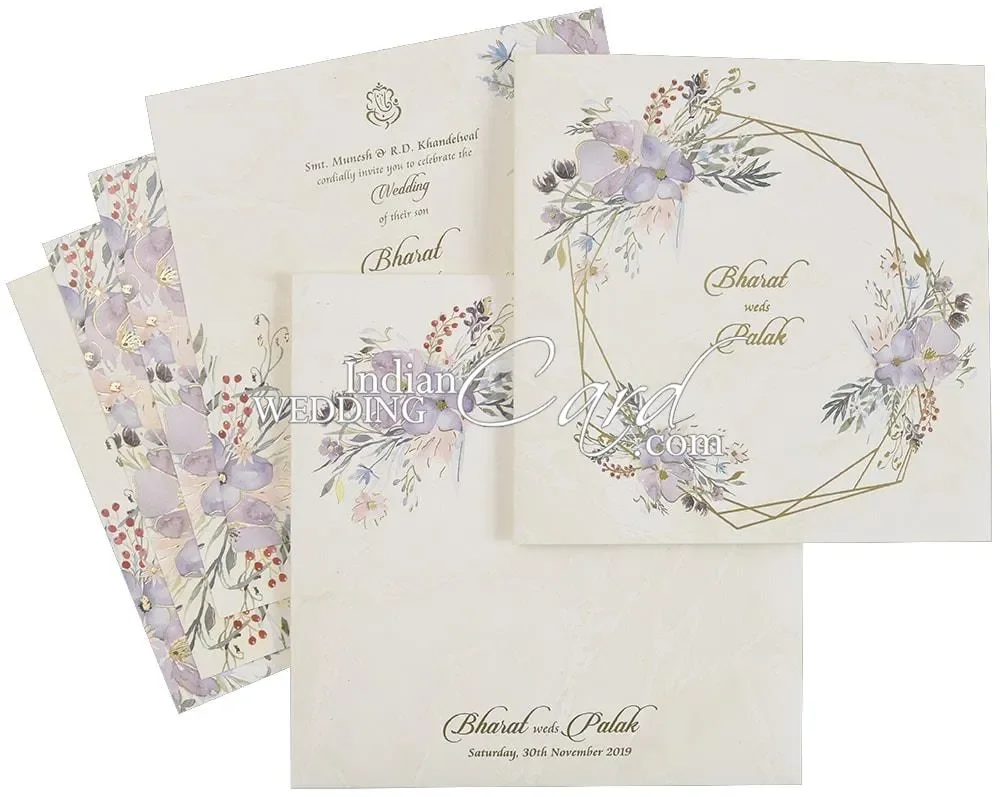
Floral invitations bring together Indian design references and contemporary botanical patterns. Pastel colours and delicate artwork create a softer effect, making this style a good fit for garden weddings, daytime ceremonies and elegant receptions.
Motifs and personal details
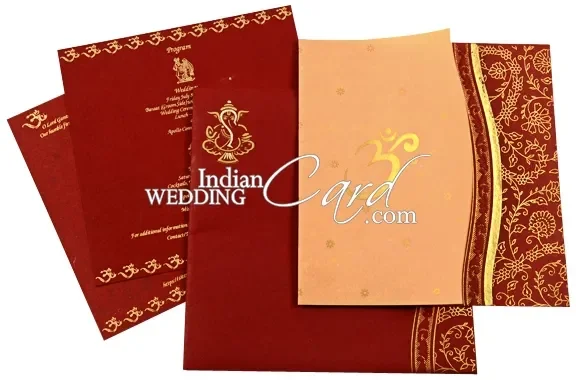
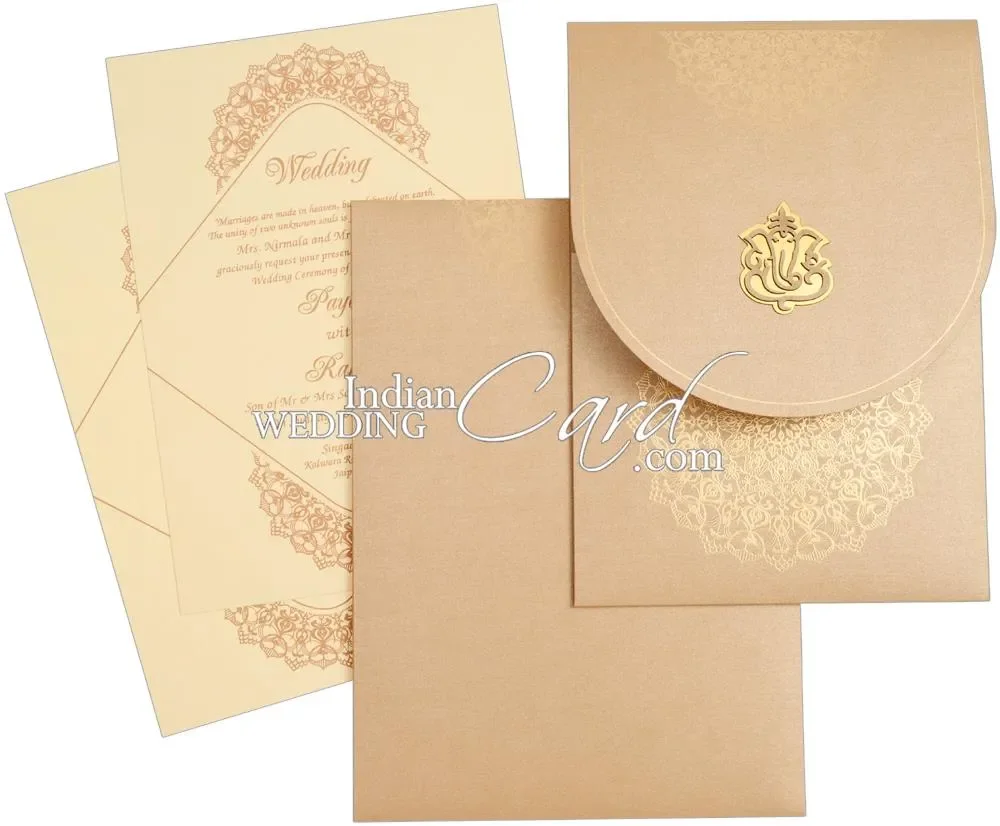
Ganesha-themed invitations feature the elephant-headed deity, associated in the source with good luck. Illustrations may be combined with gold embossing, temple artwork and other traditional motifs.
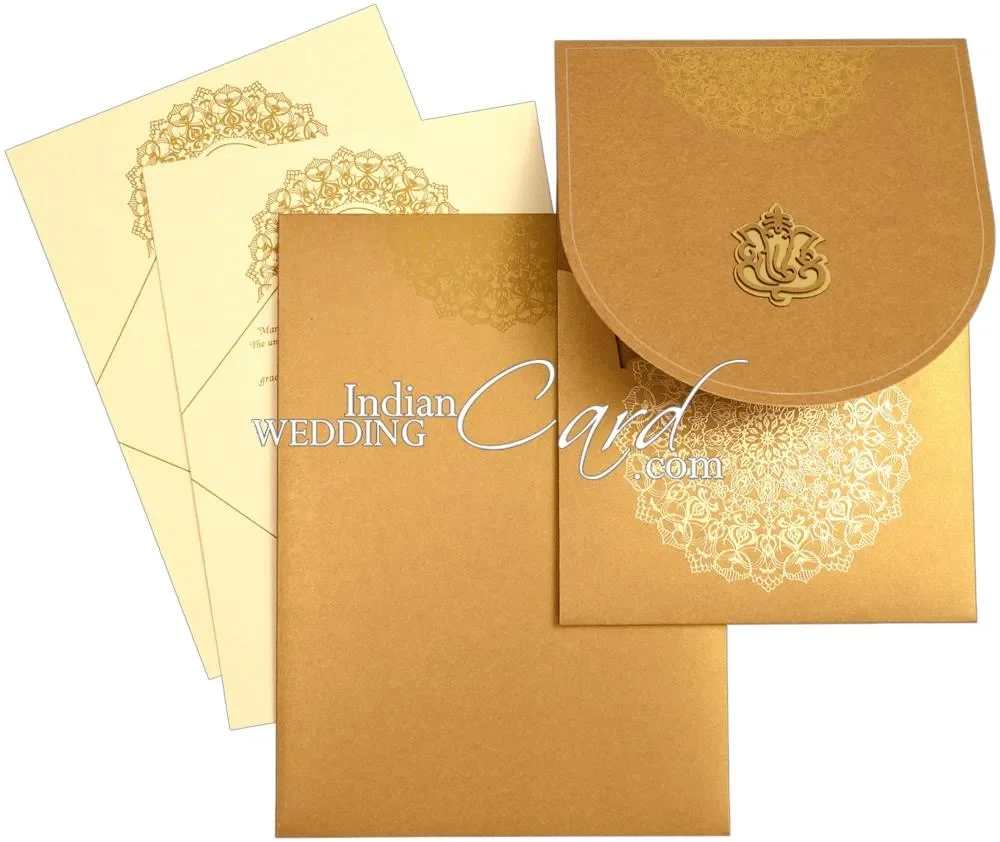
Mandala invitations use intricate circular patterns found in Hindu and Buddhist traditions and across Nepal and other places. They can suit traditional weddings, cultural celebrations and formal events.
Temple-inspired invitations translate architectural details into card design: look for bells, lotus flowers and intricate carvings. The result can express Hindu traditions while retaining a regal quality.
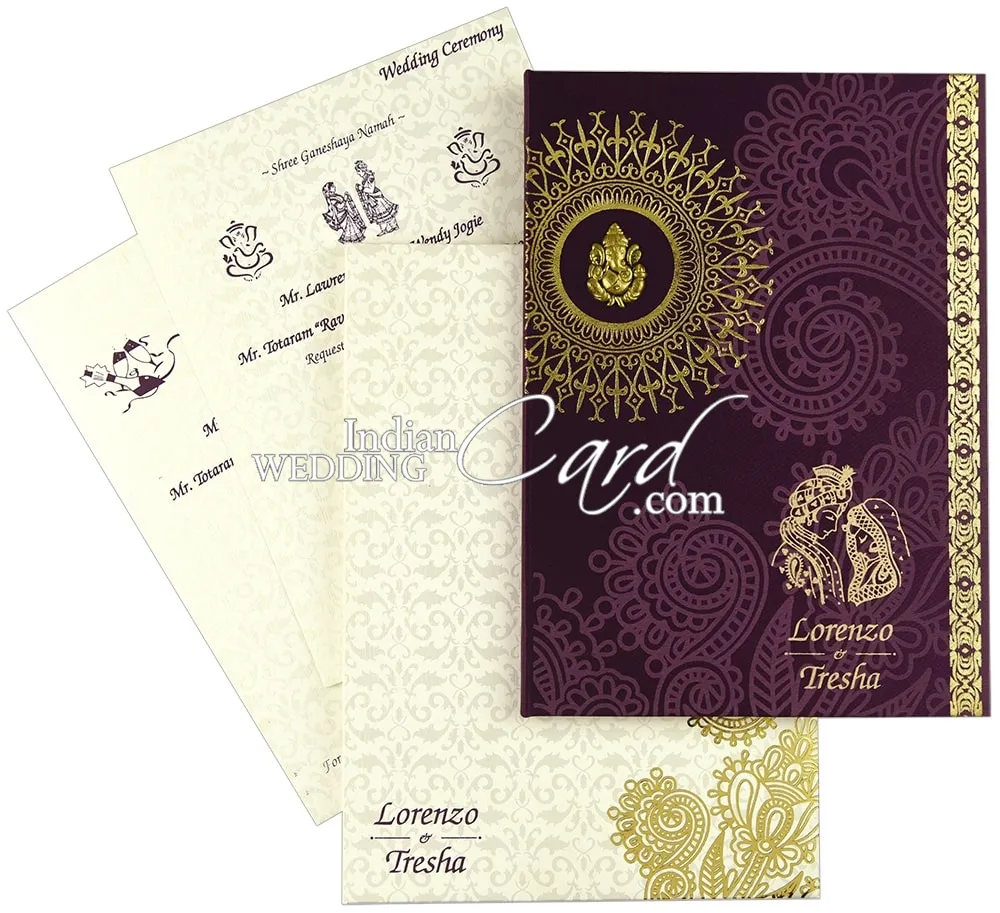
Monogram invitations give a couple or family a distinctive visual mark through initials, a wedding logo or a family emblem. Personal artwork can make the invitation feel individual and turn it into a keepsake.
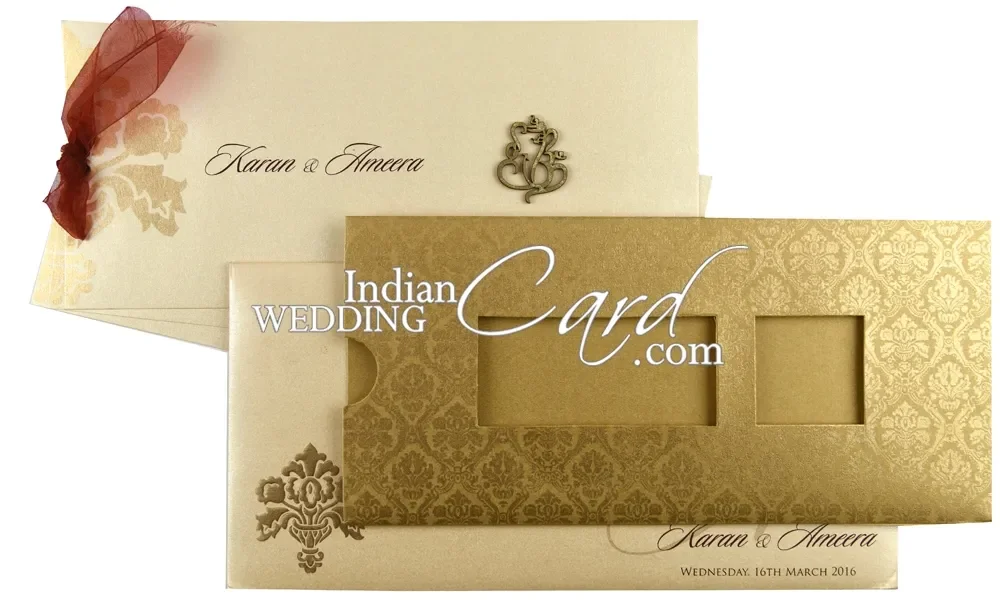
Multi-layer sets organize the event’s practical information across coordinated inserts. Alongside the main invitation, a set can include an RSVP card, ceremony schedule, accommodation details, reception information and direction cards. This format is useful when guests need more than one event detail in hand.
Match the format to the celebration
| Wedding style | Suggested invitation |
|---|---|
| Royal wedding | Royal box |
| Luxury celebration | Velvet |
| Traditional Hindu wedding | Scroll |
| Modern wedding | Acrylic |
| Elegant ceremony | Laser cut |
| Spiritual theme | Ganesha |
| Cultural celebration | Temple-inspired |
| Designer wedding | Monogram |
Before placing an order
Use these checks in order: match the invitation to the wedding theme; choose premium-quality paper or acrylic; decide whether traditional Hindu motifs belong in the design; select a printing technique; customize colours and typography; then order samples before final printing. A sample lets you assess materials, finish and legibility before committing to the finished set.
Indian Wedding Card offers bespoke Hindu invitations across styles including laser-cut, scroll and acrylic designs. Whether the priority is a keepsake box, a traditional motif or a contemporary surface, compare the format with the celebration and the information guests need. The source also recommends ordering invitations at least 3–4 months before the wedding to allow time for customization and delivery.