Sample No. 0213
Wedding Film Editing: How Footage Becomes a Story You’ll Keep
Wedding film editing brings together footage, voices, music and color to create a personal story. See what happens after the cameras stop.
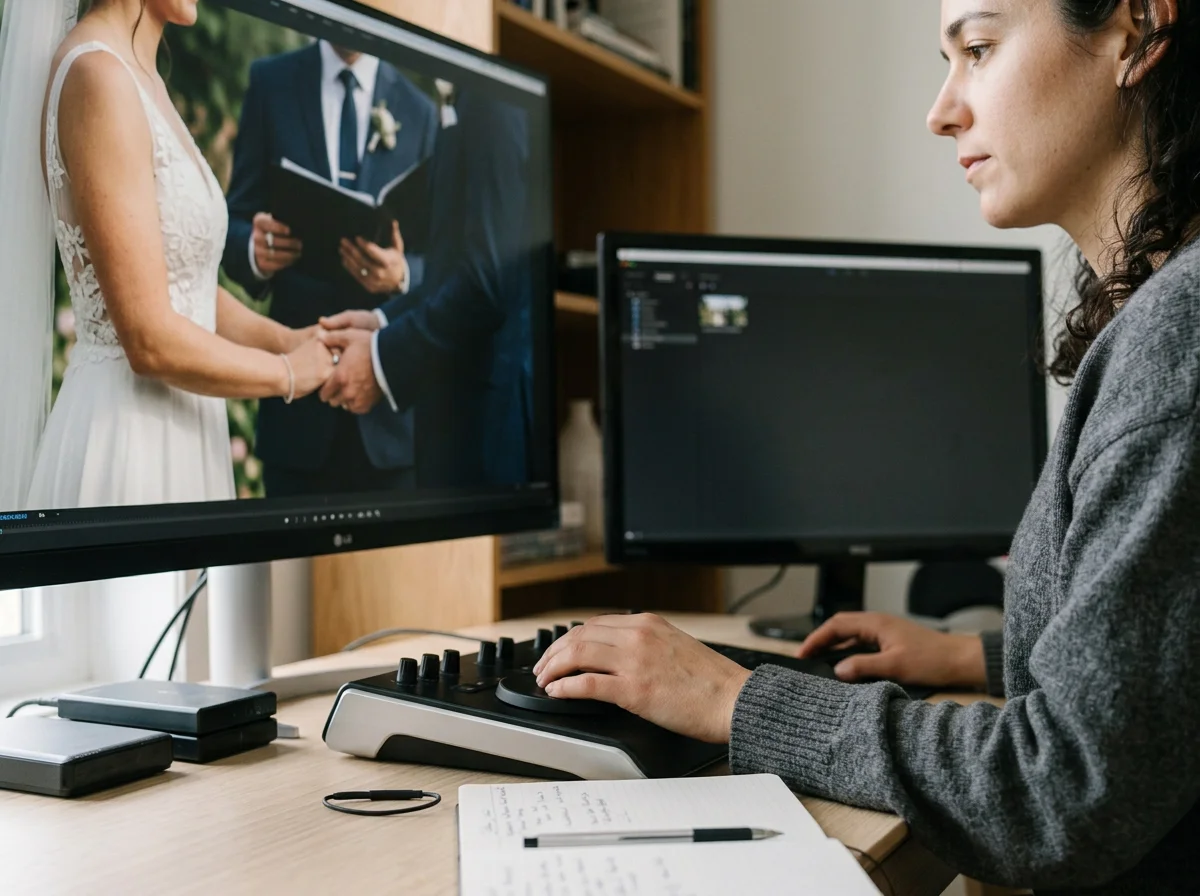
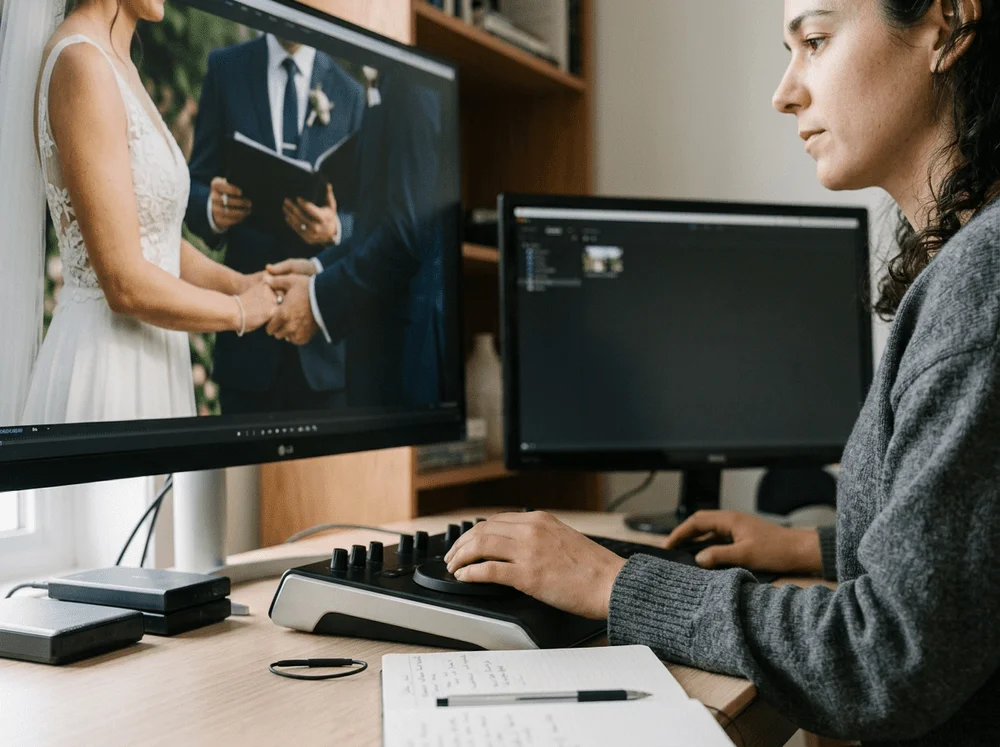
A wedding film takes shape twice: first during the celebration, then in the edit. The cameras record people, places and sounds; the editor decides how those pieces fit together and which moments best convey the day. That work reaches well beyond trimming clips. It calls for careful organization, attentive listening and choices about story, pacing, music and color.
For couples comparing videographers, the finished films offer a useful view of that approach. Equipment can capture an image, but the edit determines whether a sequence feels like a record of events or a story with its own rhythm and emotional arc.
From many clips to a clear story
A full wedding day can produce hundreds or even thousands of clips, depending on coverage length, the number of cinematographers and the cameras used. The material might include preparations, venue details, the ceremony, vows, portraits, cocktail hour, speeches, cultural traditions, first dances and the reception.
Some of the most revealing footage may come from moments that weren't planned: a family conversation, a burst of laughter, a friend reacting to a toast or a brief exchange between guests. Those details can give a film its personality. The editor reviews the footage to find moments that are both technically usable and meaningful to the larger story.
That means the finished film won't include every recorded clip. A long collection of attractive shots can still feel disconnected; thoughtful selection gives the viewer a reason to move from one scene to the next.
Organization comes before creative decisions
When several cameras record the day, each creates a separate set of files. Audio may also be captured independently, and one moment can exist in multiple camera angles. Before shaping the story, the editor sorts and identifies the footage, matches recordings with the right images and synchronizes angles so they can be joined naturally.
This technical groundwork is easy to overlook when watching the final film, yet it makes the later decisions possible. Clear organization helps the editor compare perspectives, find the right reaction and bring a speaker's voice into sync with the image.
Next comes the viewing. The editor needs to understand what happened across the day, including which takes are unusable, which are repetitive and which small moments carry an emotional charge. A glance, hug or laugh can say more about the gathering than another polished establishing shot.
Chronology is one storytelling choice
A wedding takes place in sequence, but the film doesn't have to follow that order from beginning to end. A line from the vows might introduce the story; a parent's speech could give emotional meaning to footage from earlier in the day; reception laughter might accompany preparations. These connections can bring the celebration together in a way a simple chronological assembly may not.
As the first version develops, the editor combines key images with vows, speeches, reactions, natural sound and music. The aim is for scenes to build on one another rather than play like unrelated excerpts. Two editors working with the same footage could emphasize different parts of the day: its chronology, the couple's relationship, family responses or the emotional turns in the celebration.
That range is why finished films are useful when evaluating a videographer's style. They show how the editor handles real moments and builds a beginning, a progression and an ending that leaves a distinct impression.
Voices and atmosphere need room
Clear sound can bring a memory back with unusual force. Vows, readings, speeches and toasts sit alongside live music, laughter, applause and the natural sound of the room. The editor has to balance those elements so that important voices remain understandable while the ambience of the celebration stays present.
Music shapes the film's pace and mood, but it should work with the scene rather than simply sit beneath it. A quiet preparation sequence may call for a restrained sound; a lively reception may need more energy. During a speech, music can leave room for the speaker instead of competing for attention. Natural sounds, music and the timing of the images all contribute to a cohesive viewing experience.
Some of the film's most affecting moments may be heard as much as seen: a partner's words, a parent's toast or a grandparent speaking. The right balance lets those voices remain part of the story.
Color, pacing and the value of restraint
Wedding footage often moves through different lighting conditions: a bright hotel room, a church, an outdoor setting and a reception hall. Multiple cameras can also record slightly different color and exposure. Color correction brings those images closer together, with balanced exposure and natural-looking skin tones, while preserving the character of each setting.
Once the story is assembled, further refinement may involve shortening or extending shots, adjusting transitions, balancing audio and revising music. The editor may also remove scenes that don't add to the film. Even a lovely moment can interrupt the flow if it doesn't support the story taking shape.
That restraint matters especially in a highlight film. A strong highlight isn't just a string of appealing images; it has progression, develops feeling and builds toward something meaningful. It doesn't need to show everything to reflect what mattered.
Why editing takes time
Delivery time varies with the scope of the wedding, the amount of footage and the films included in a package. The work includes reviewing and organizing recordings, selecting moments, editing audio, fitting music to the story, refining color and checking the finished film before delivery. It involves far more than transferring files from a camera to storage.
There are no reshoots for a wedding day. The editor has to shape the material that was captured, making each choice count. Careful post-production gives the images and voices enough structure to be revisited as a film, rather than leaving couples with a raw record of the day.
What to look for when comparing videographers
Technical skill matters, alongside an editor's sense of emotion, timing and pacing. They need to know when a moment should breathe, how dialogue works with music and how separate scenes can create a larger story. Each wedding is different, so a finished film should feel connected to the people and celebration it depicts rather than like a template filled with new footage.
For couples considering Toronto videographers, watching complete finished films can reveal more about storytelling than camera specifications or a short promotional reel. Xpression Video Productions describes its work as serving Toronto, Brampton, Mississauga, Vaughan, Woodbridge, Niagara and elsewhere across the GTA. Its wedding films and cinematography work offers examples of its editing approach.
When choosing a videographer, consider who will shape the footage after the celebration and how their finished work handles voices, atmosphere and the small interactions that make a gathering personal. The cameras preserve the moments; the edit gives them rhythm and a place in the story.
Couples interested in Xpression Video Productions can get in touch about their wedding plans.