Sample No. 0129
Destination Wedding Dresses: Fabric, Venue and Travel Tips
Match your gown to the setting and season, then plan ahead for shoes, alterations and safe travel to make the destination celebration easier.
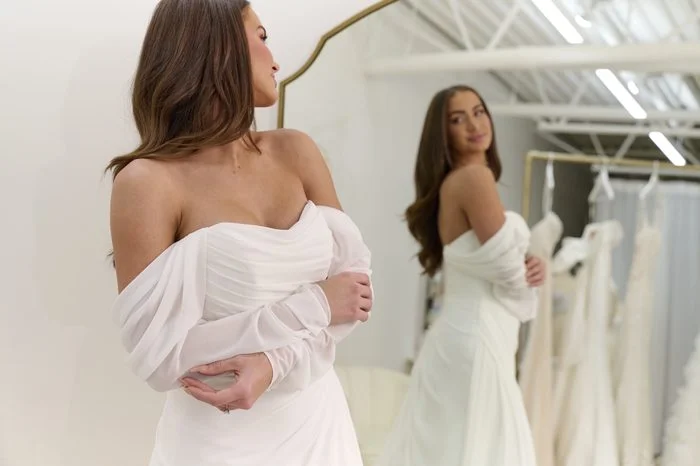
A destination gown has two jobs: it should feel like you, and it should work for the place where you’ll wear it. Climate, terrain, ceremony style and the journey to the venue all shape the decision, but none should dictate one particular silhouette. Chiffon can suit a breezy seaside ceremony; a structured Mikado gown can feel right at a formal mountain venue. The useful starting point is knowing how each fabric and design may behave across the whole day.
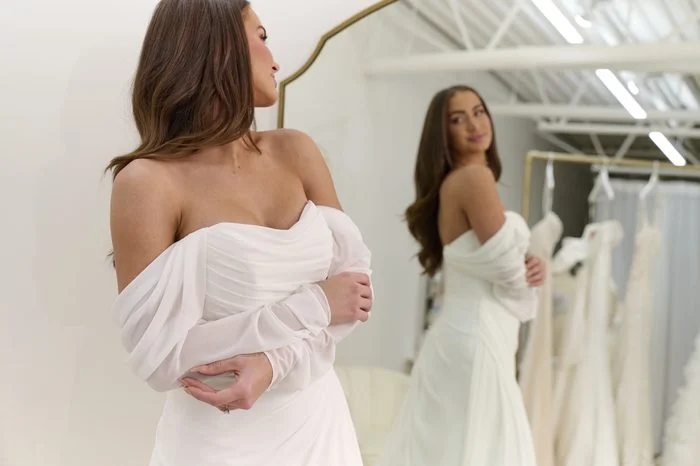
Choose fabric with the setting in mind
Start with the season and location, then consider how you want to move and feel from the ceremony through the reception. Warm weather may make breathable layers appealing, while a formal winter celebration can call for sleeves or richer texture. The gown’s lining, layers, embellishments and construction matter as much as the fabric name. An Authorized Boutique can help explain how a specific design may feel in your chosen climate.
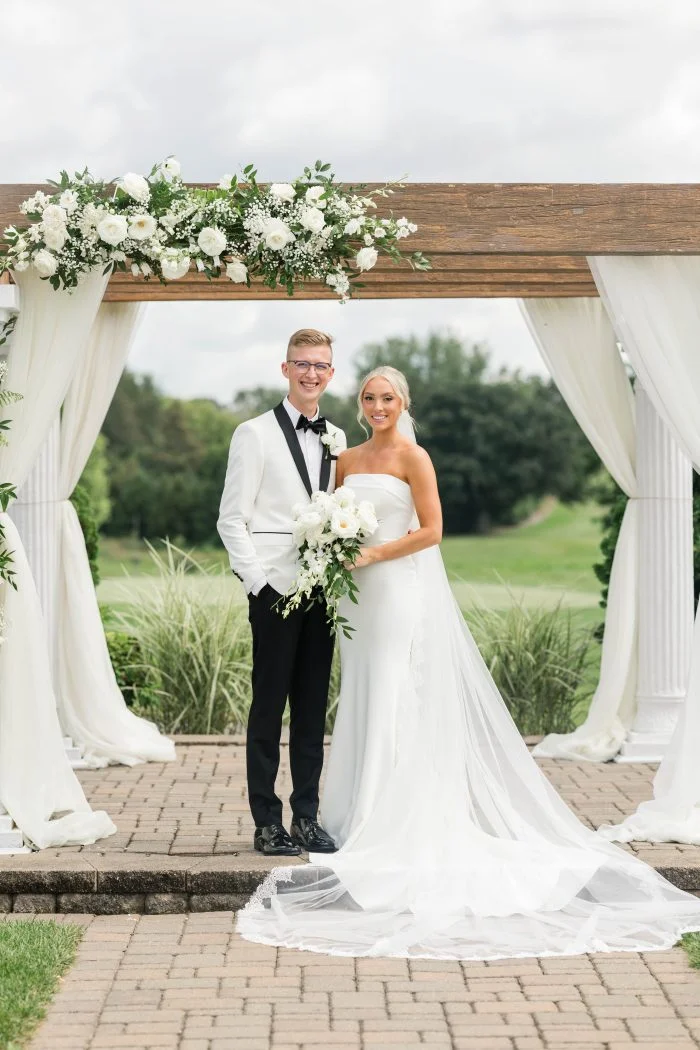
Chiffon is light and fluid, making it a natural option for outdoor ceremonies, warm-weather celebrations and beachside vows. Its movement suits relaxed silhouettes, though delicate fabric can wrinkle during travel. Maggie Sottero’s guide to getting wrinkles out of a chiffon wedding dress offers fabric-specific care advice.
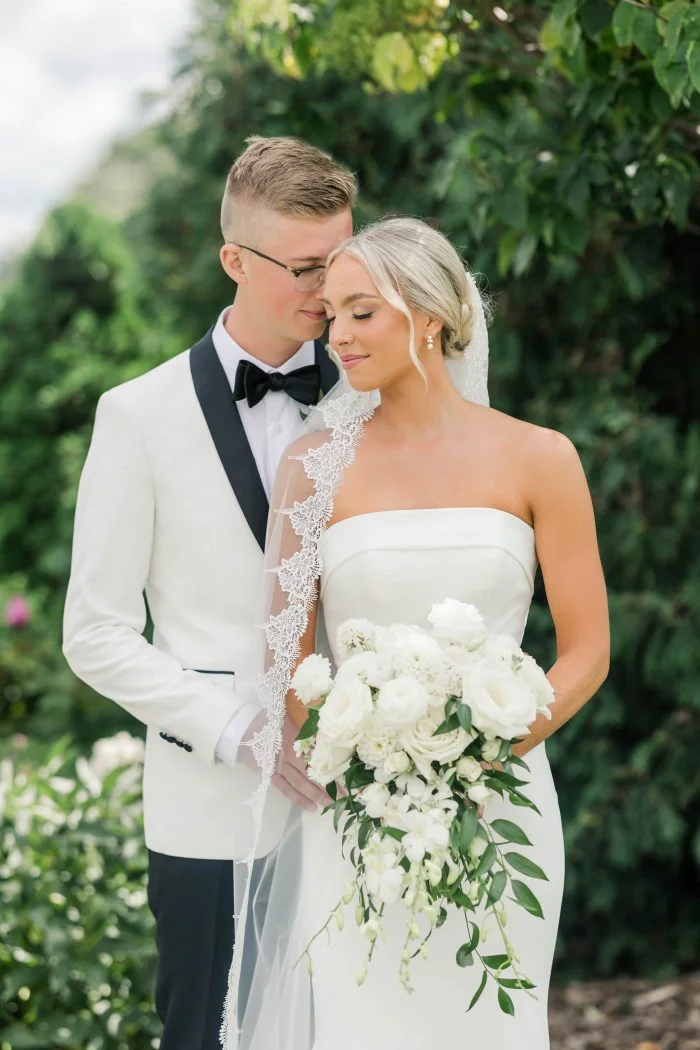
Crepe gives a gown a sleek, modern finish. Depending on its construction, it can skim the body or hold a clean sculptural shape, which can work well for minimalist styling, city celebrations and contemporary venues. The brand’s guide to crepe wedding dress fabric explains more about its texture.
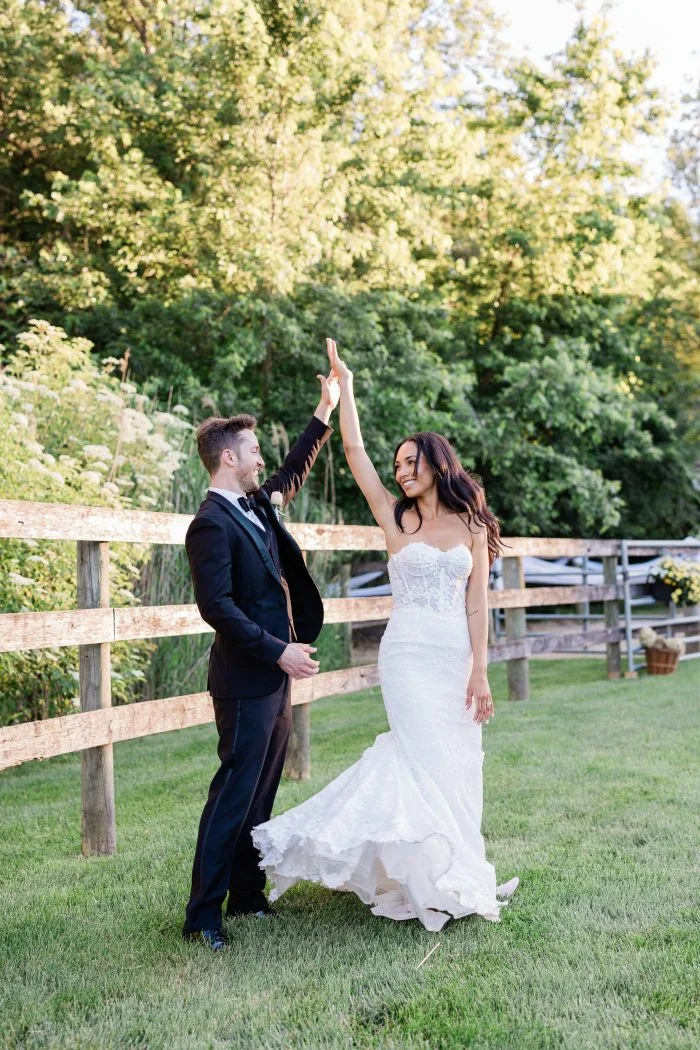
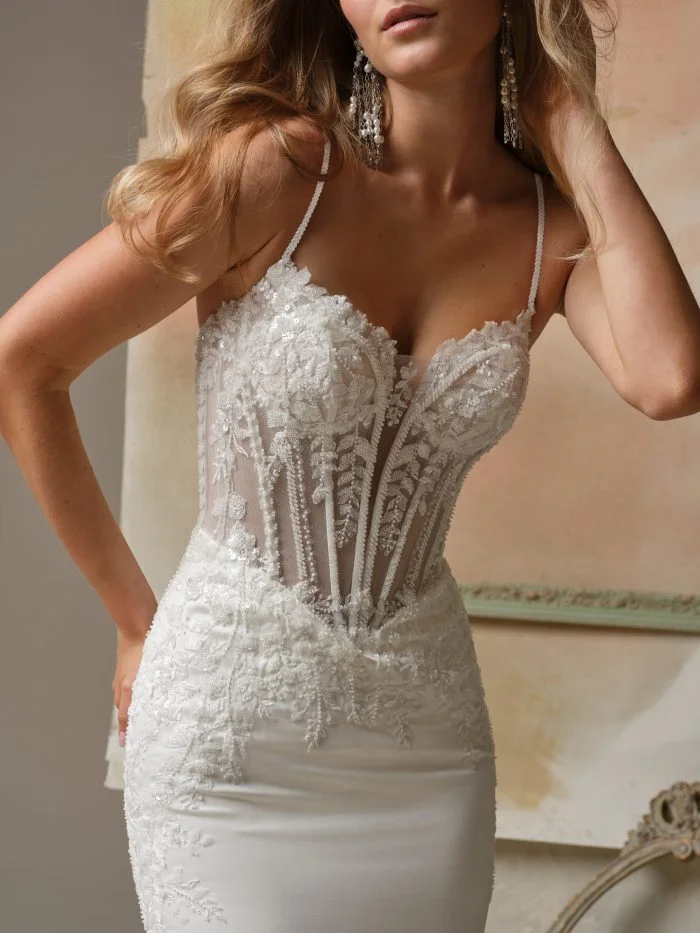
Stretch fabric may give you more ease of movement, depending on the fit and construction. That can be useful when travel, exploring the destination and a full day of celebrating are part of the plan. For gowns with internal corsetry, the brand’s guide to corset wedding dresses describes how that structure can contribute to a secure, personalized fit.
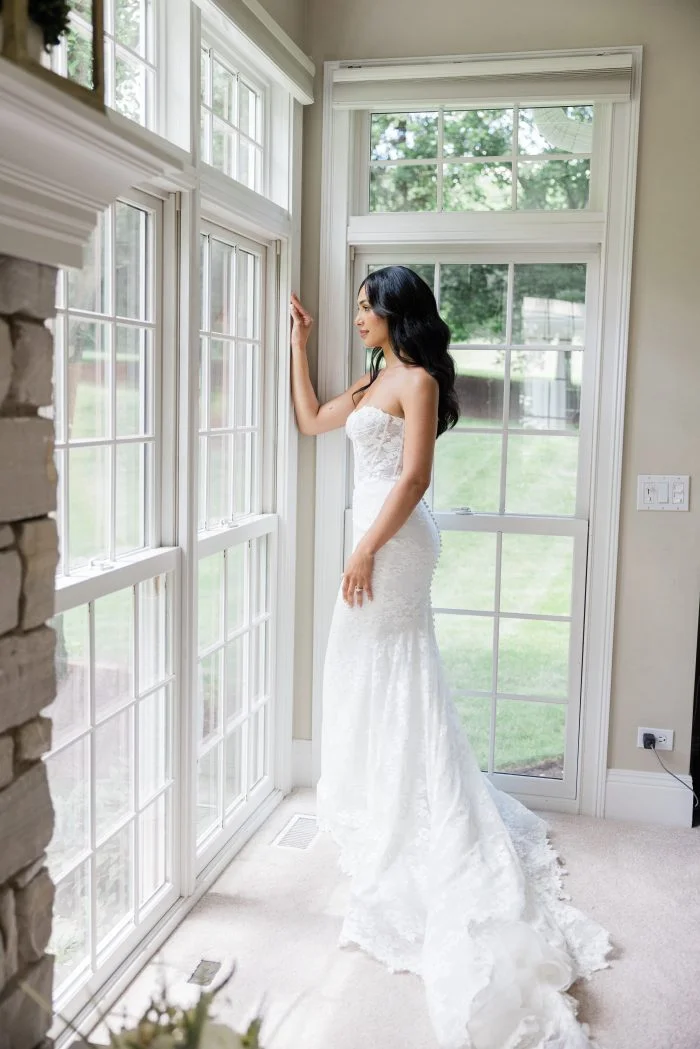
Jacquard and brocade bring woven pattern and dimension to a gown. Their texture can suit historic estates, European-inspired venues and formal winter celebrations. Maggie Sottero’s brocade wedding dress guide covers both fabrics.
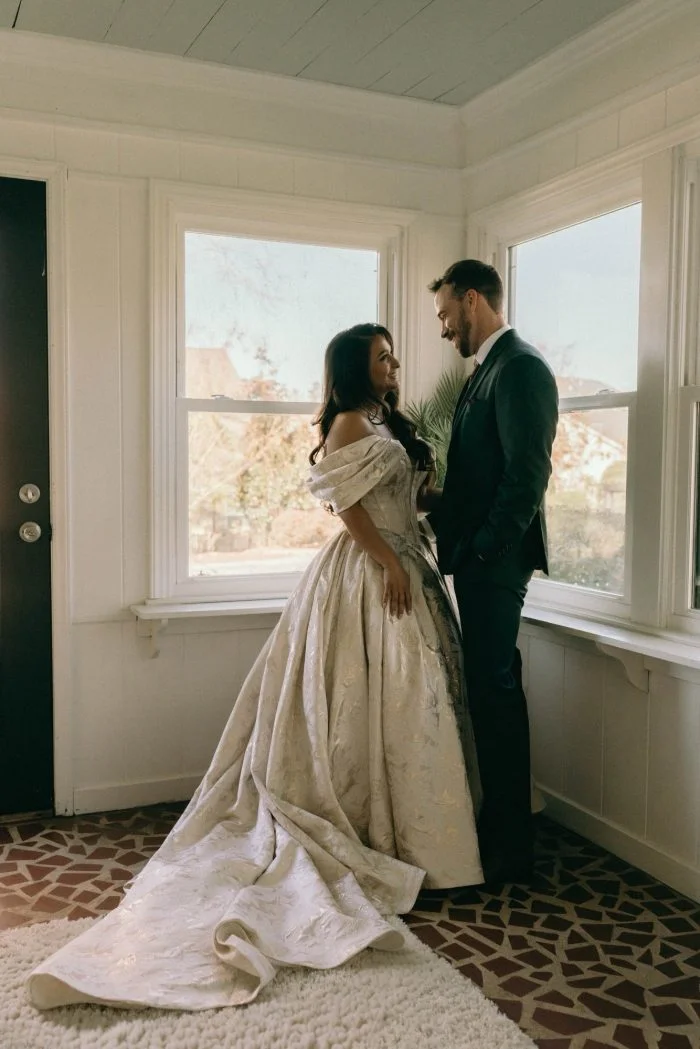
Mikado pairs crisp structure with a luxurious texture. It can be a fitting choice for formal celebrations, grand architecture and venues where a dramatic silhouette feels at home. See the brand’s guide to Mikado wedding dress fabric for more detail.
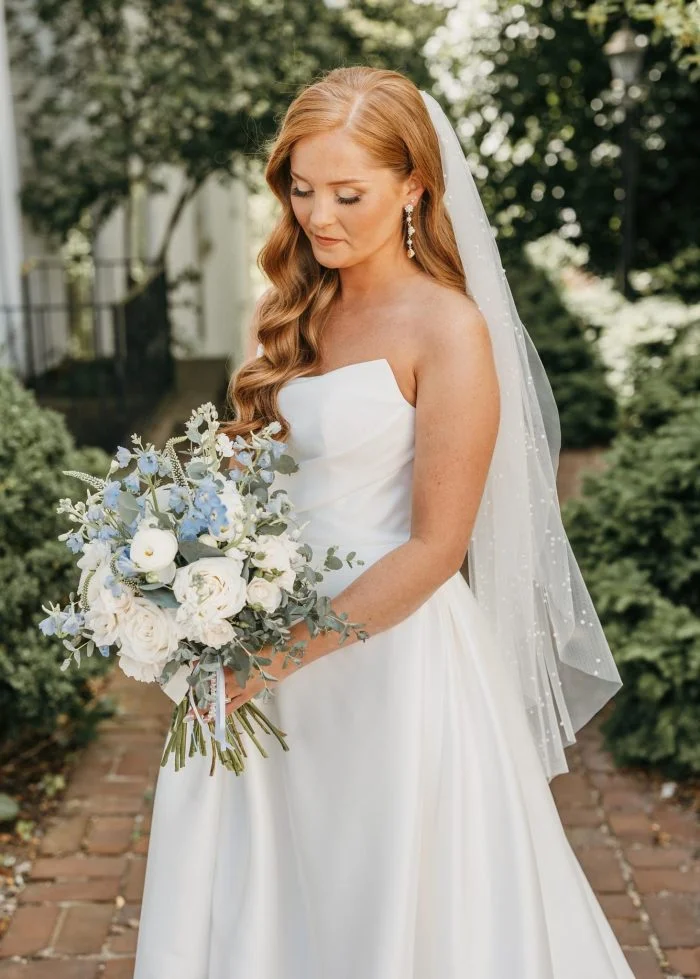
Organza catches the light and can create anything from airy layers to a voluminous skirt. It suits garden ceremonies, tropical celebrations and fairytale-inspired settings. Whichever fabric draws you in, ask how the complete gown will travel and feel, rather than judging from its outer layer alone.
Let the venue guide ideas, not rules
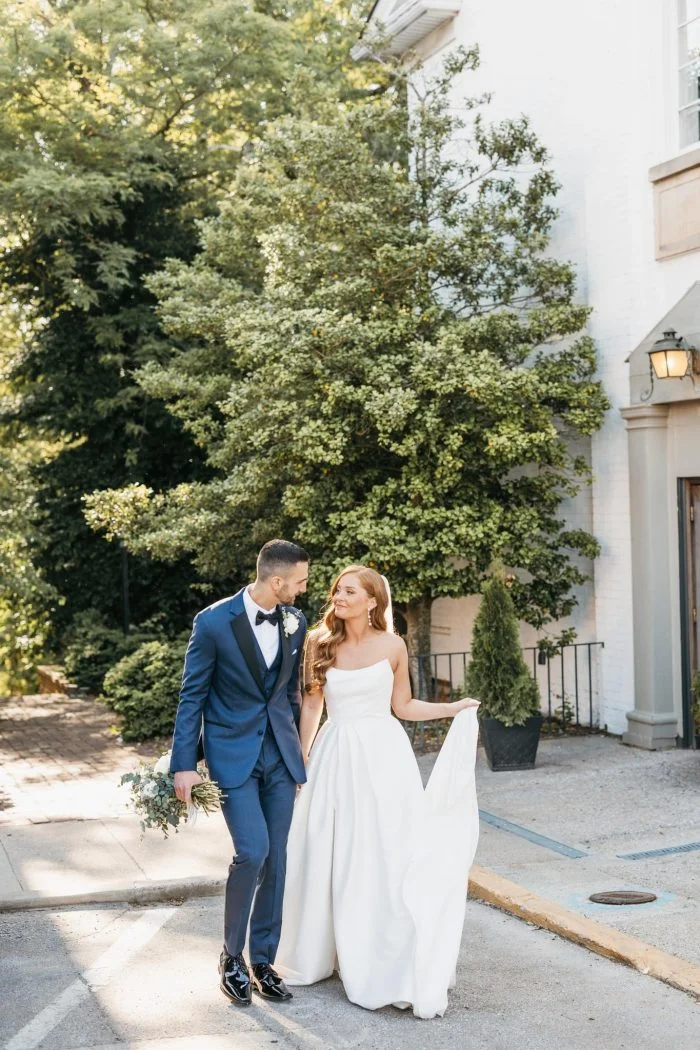
Use the landscape as a source of inspiration, then check that the gown works for your movement, comfort and personal style. Sand, grass, cobblestones and rocky paths can all affect a hem and train. The following designs illustrate different directions; they’re reference points, not requirements for a particular kind of destination.
Beach and tropical celebrations
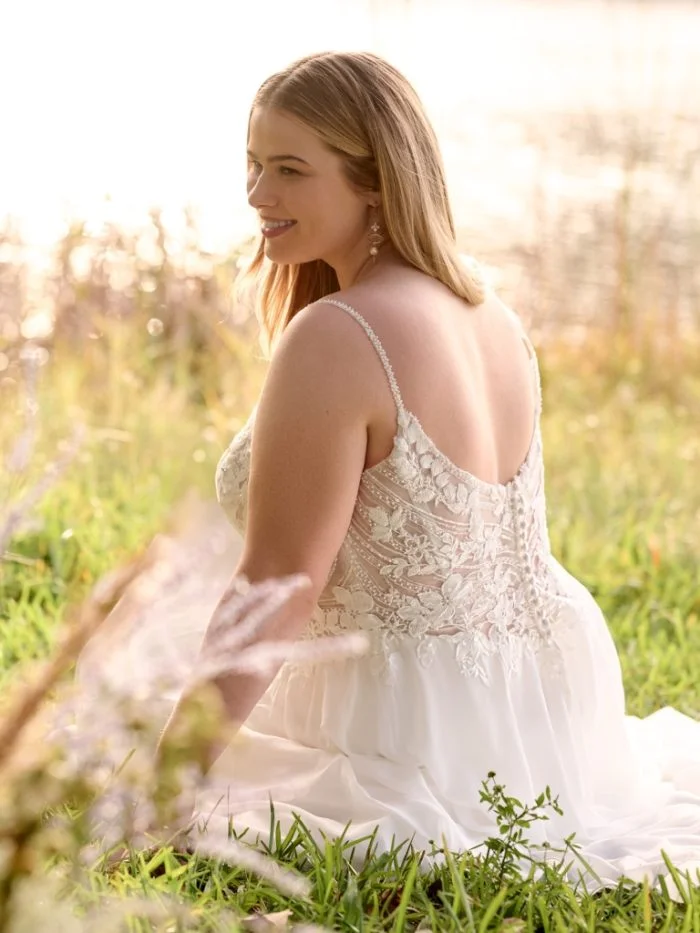
For a seaside ceremony, flowing materials, botanical details, open necklines and skirts that move in the breeze may appeal. Think about walking across sand before settling on hem length or train details.
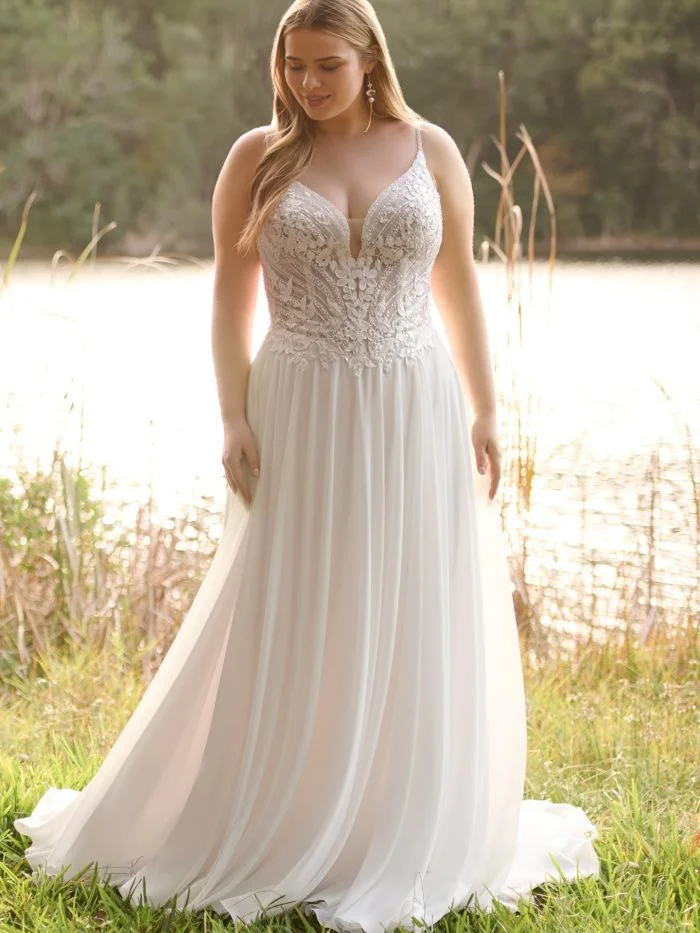
Francesca by Rebecca Ingram offers a soft, nature-inspired direction in chiffon. Brides considering sustainability can browse the brand’s sustainable wedding dresses for more ideas.
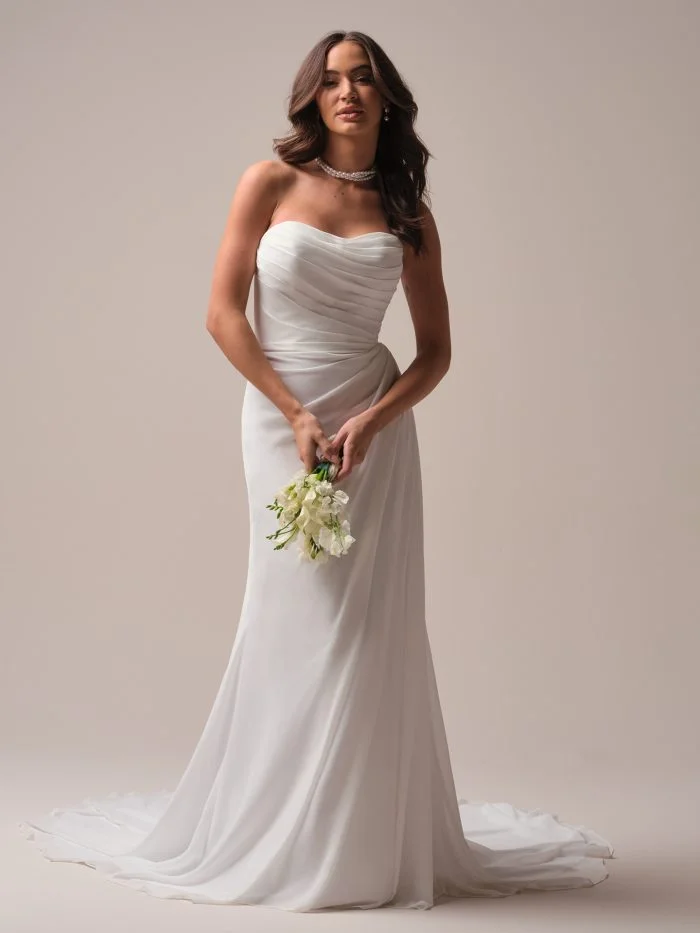
Finley by Rebecca Ingram combines flowing recycled-content chiffon with beaded and sequin lace motifs and a plunging illusion neckline. Its light, romantic details suit a relaxed outdoor celebration.
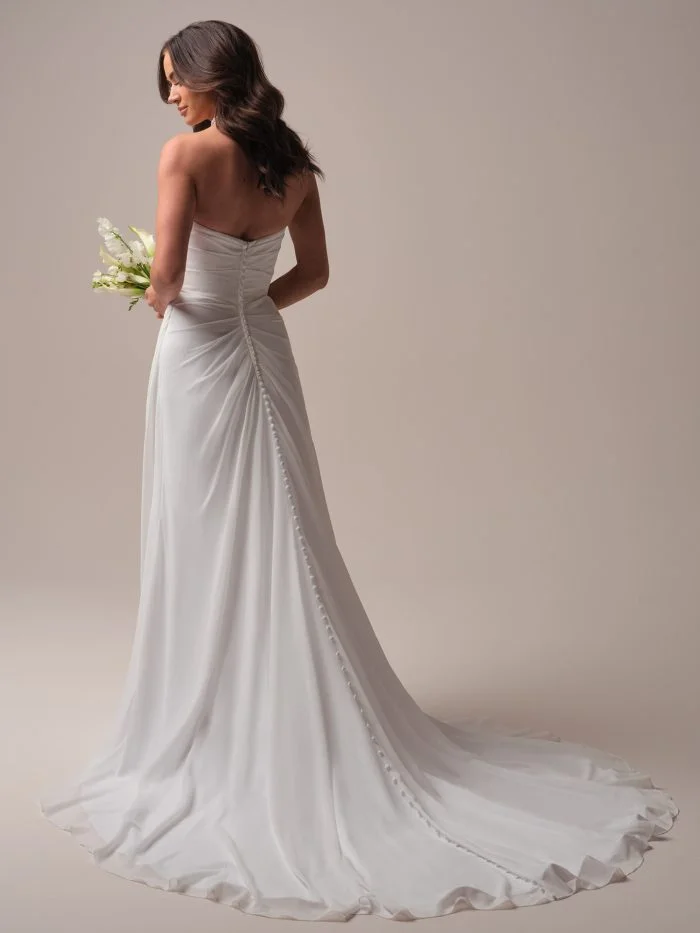
Beach dressing can also include structure and volume. Abilene by Maggie Sottero pairs a structured bodice and modern Basque waist with a layered organza skirt for a more dramatic silhouette.
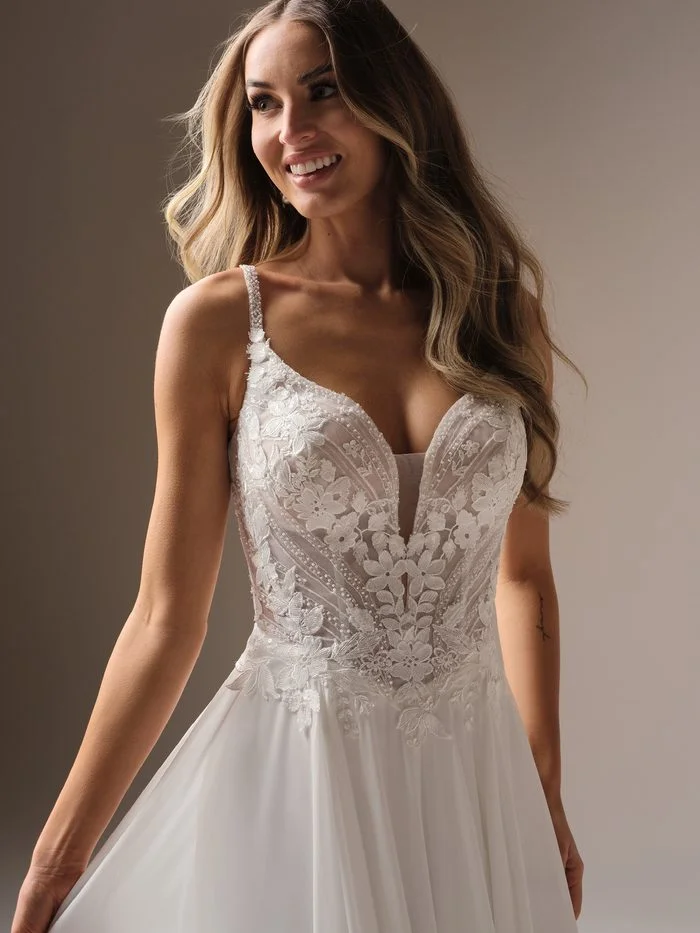
Amaryllis by Sottero and Midgley brings dimensional floral details and organza layers. Its look can be changed with detachable cap sleeves or the coordinating veil. For another way to personalize the look, explore colored wedding dresses.
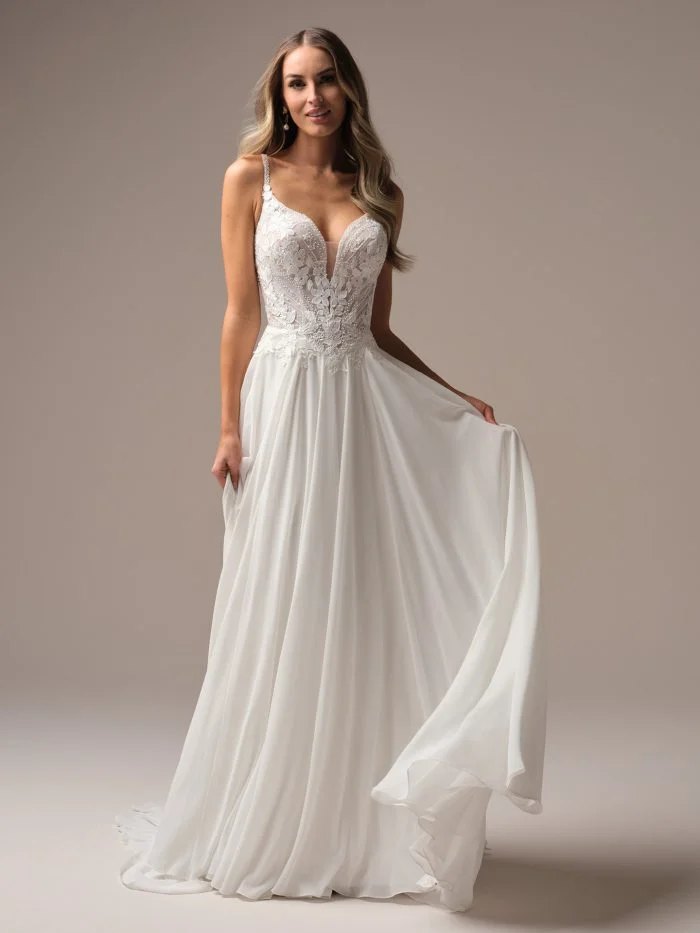
For a pared-back option, Shay by Rebecca Ingram has a bateau neckline, cap sleeves and stretch crepe. It’s available through Quick Ship, which may help when the engagement is shorter.
Desert, garden and countryside settings
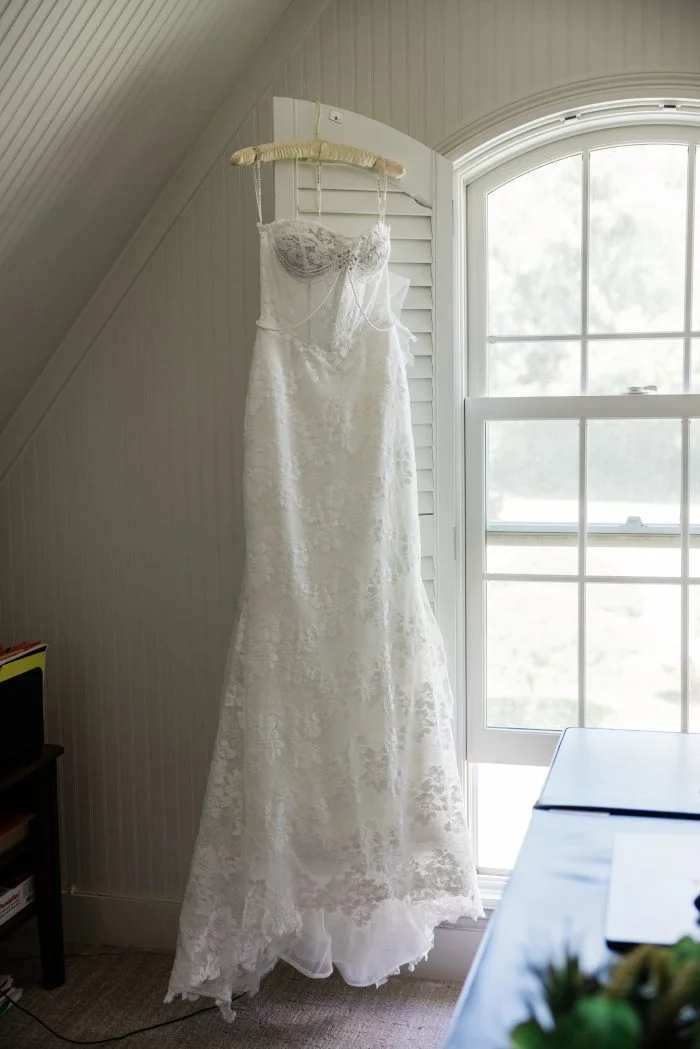
Natural scenery can pair with expressive lace, botanical details, soft movement or a more structured silhouette. For a modern garden or intimate desert celebration, Agatha by Rebecca Ingram offers a strapless banded-cuff neckline, soft Basque waist and embellished lace along the back neckline. For a more relaxed direction, see the brand’s casual wedding dress guide.
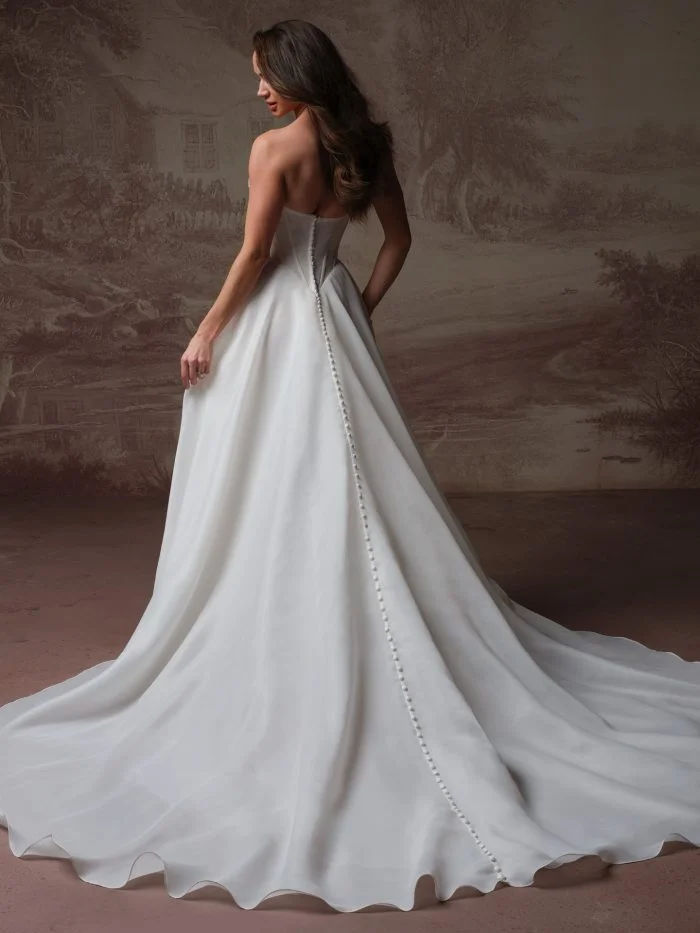
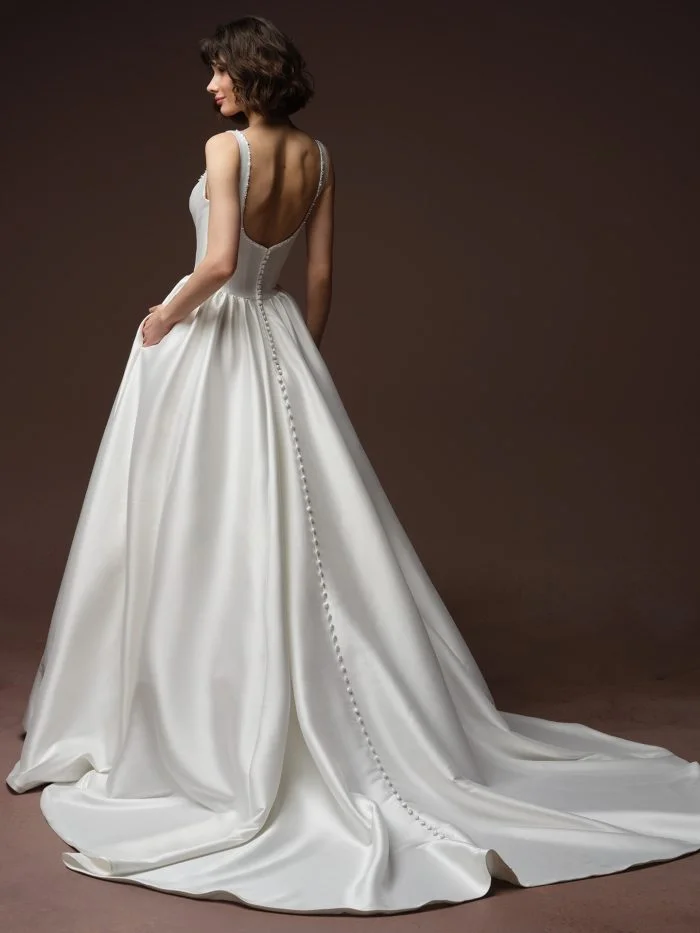
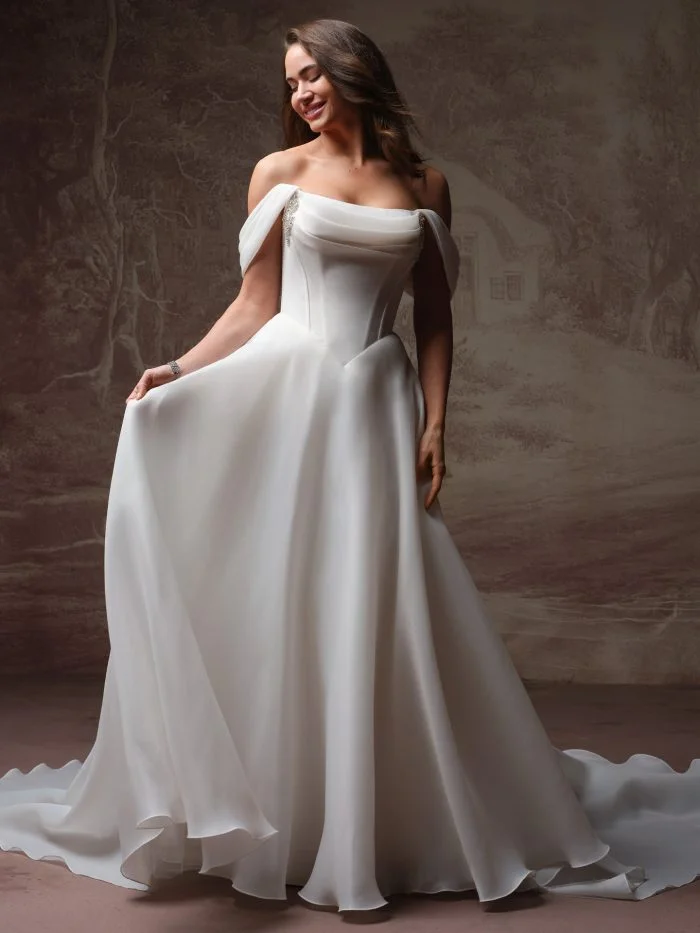
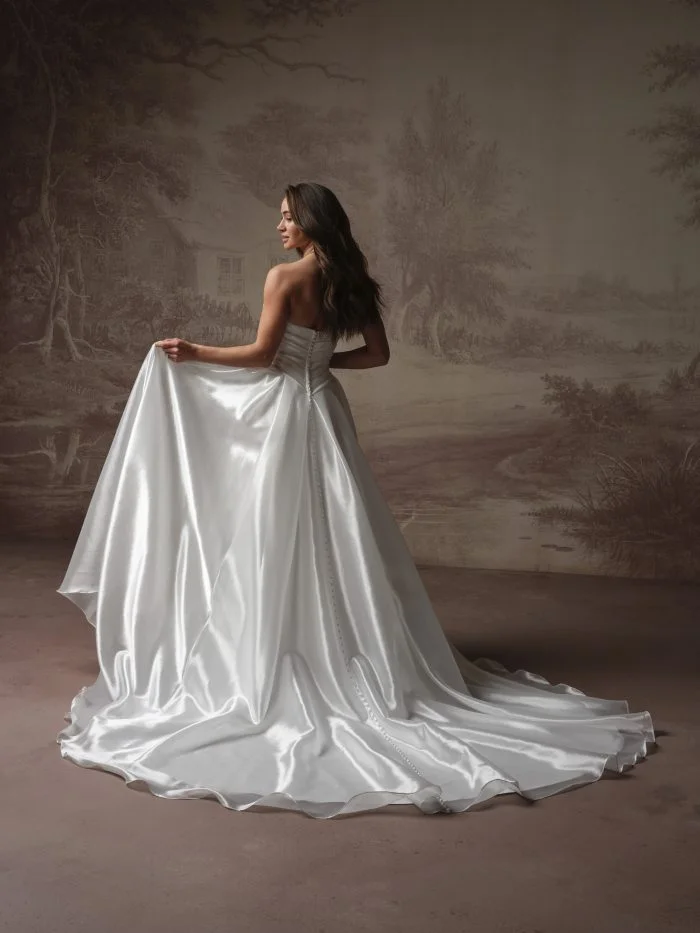
Rosamund by Maggie Sottero takes a more formal approach, with a full ballgown silhouette, lustrous fabric and asymmetrically draped bodice. It can suit garden portraits or a historic venue.
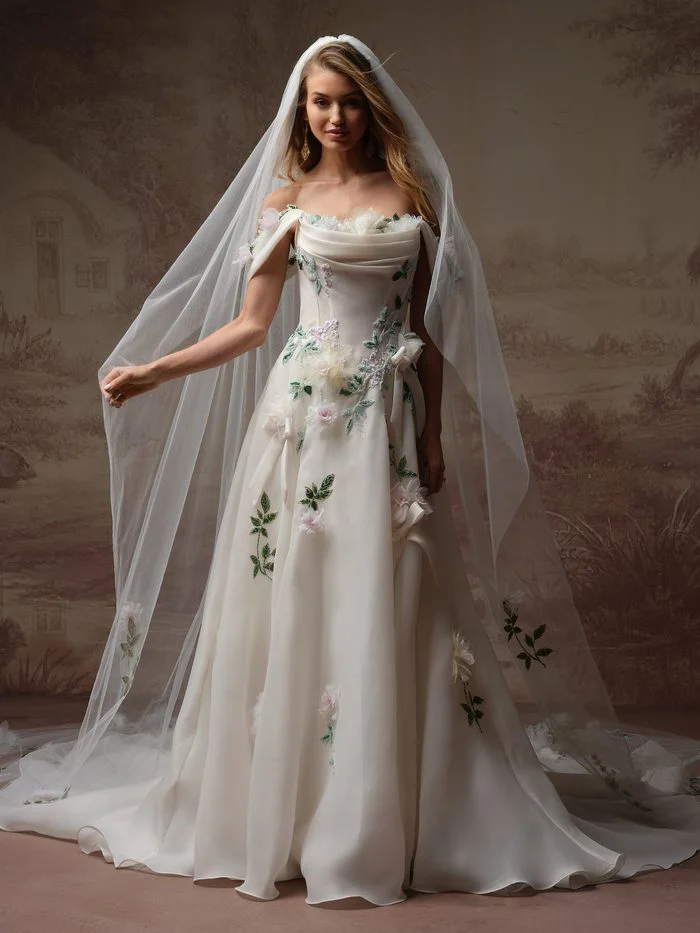
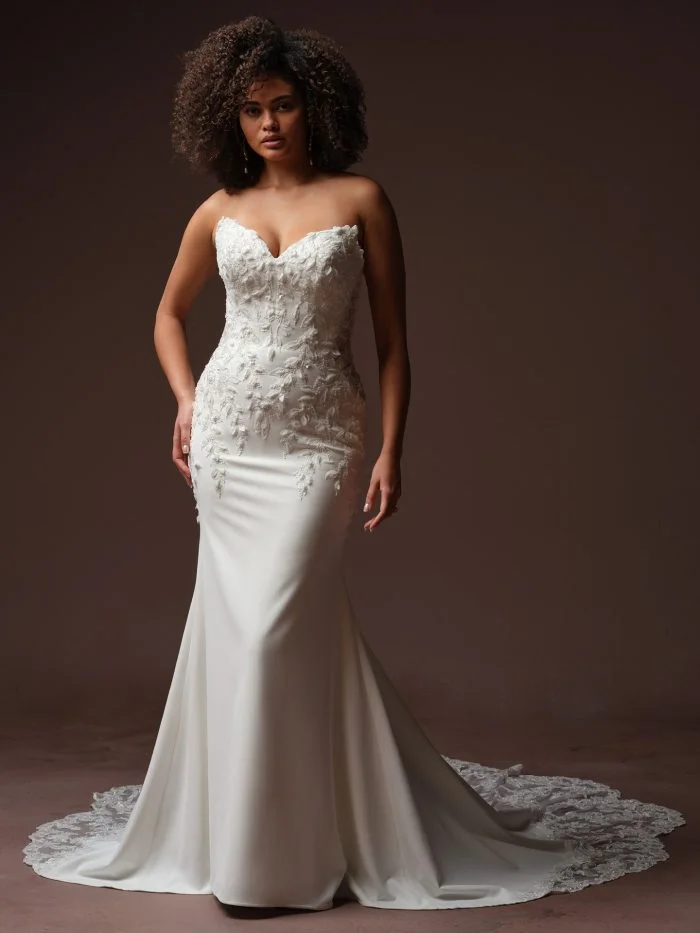
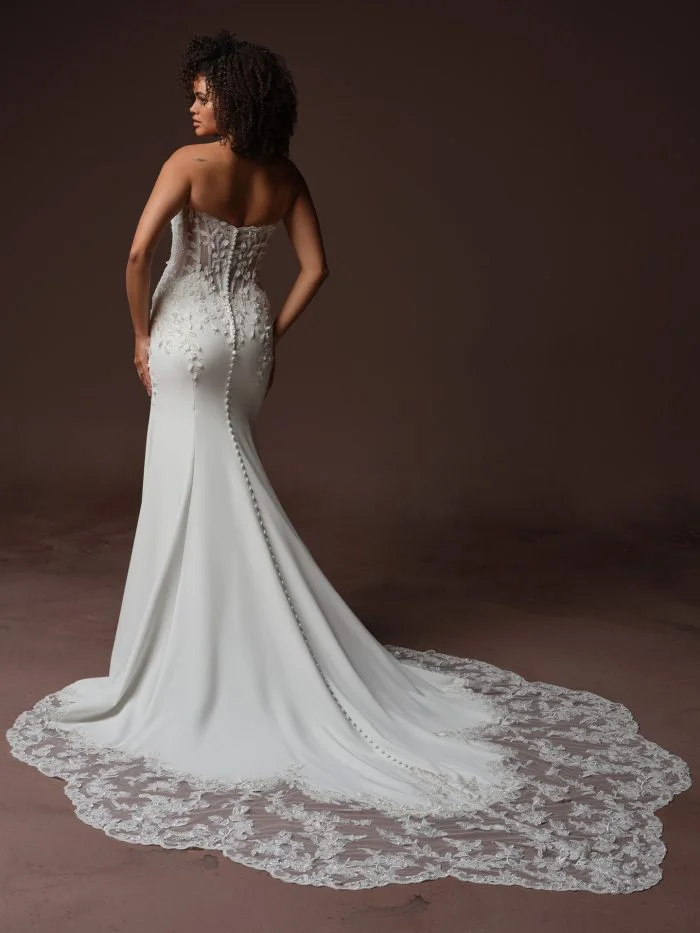
For dimensional lace, Blair by Sottero and Midgley combines beaded and sequin lace motifs with stretch crepe. Its detailed bodice and extended illusion lace train make a strong visual statement against a natural backdrop.
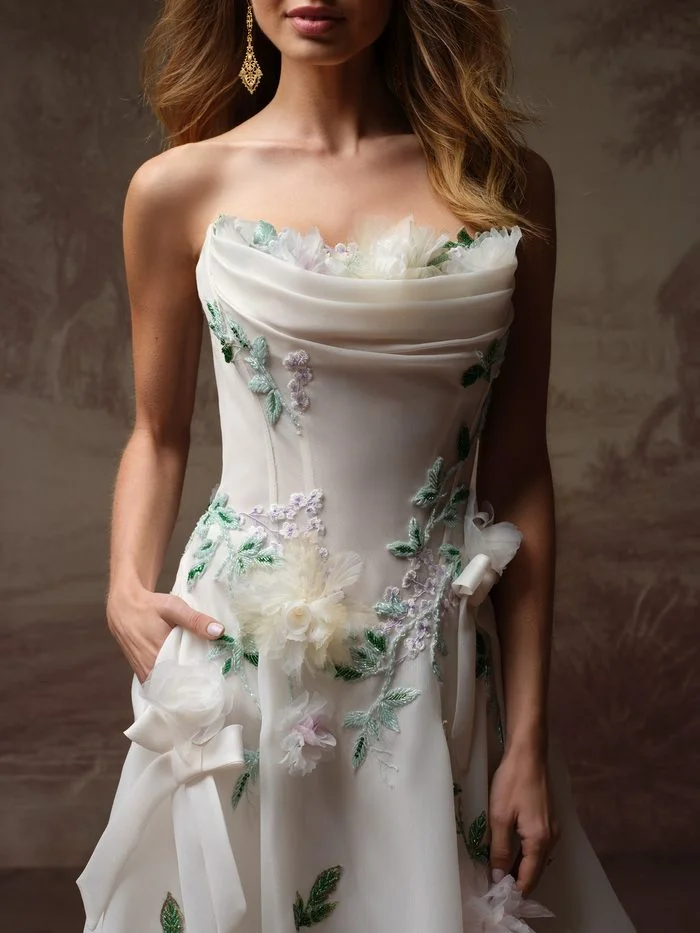
India by Maggie Sottero is another option for a garden or countryside celebration. Consider how its silhouette, texture and train will work with the setting, including garden paths and open-air ceremony spaces.
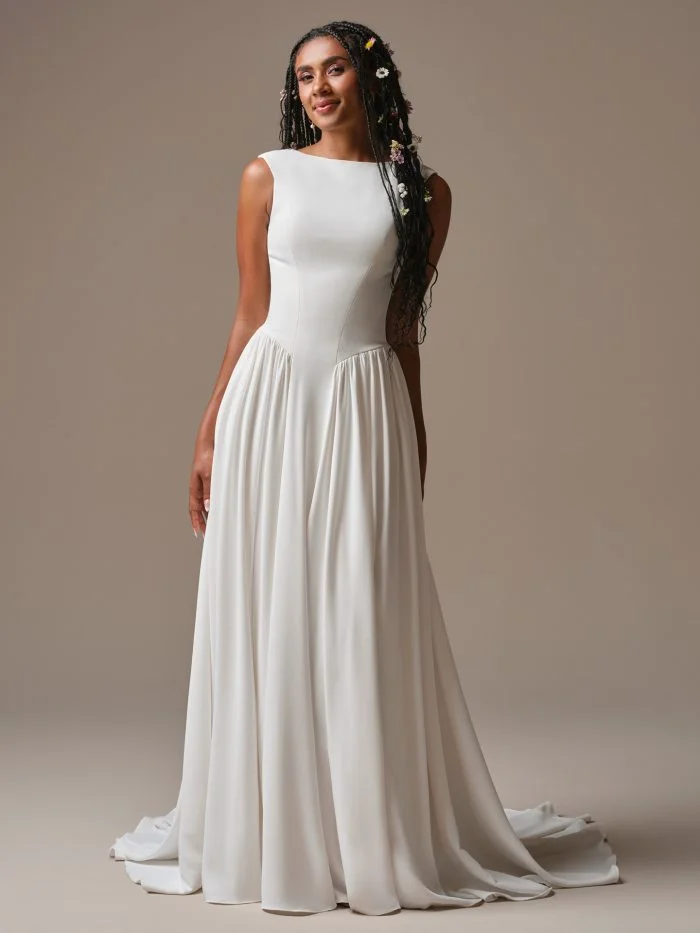
For a polished, vintage-inspired look, Prestyn by Maggie Sottero has a sleek sheath silhouette, cat-eye neckline and asymmetrically draped bodice. The design can suit a desert resort, villa or intimate destination gathering.
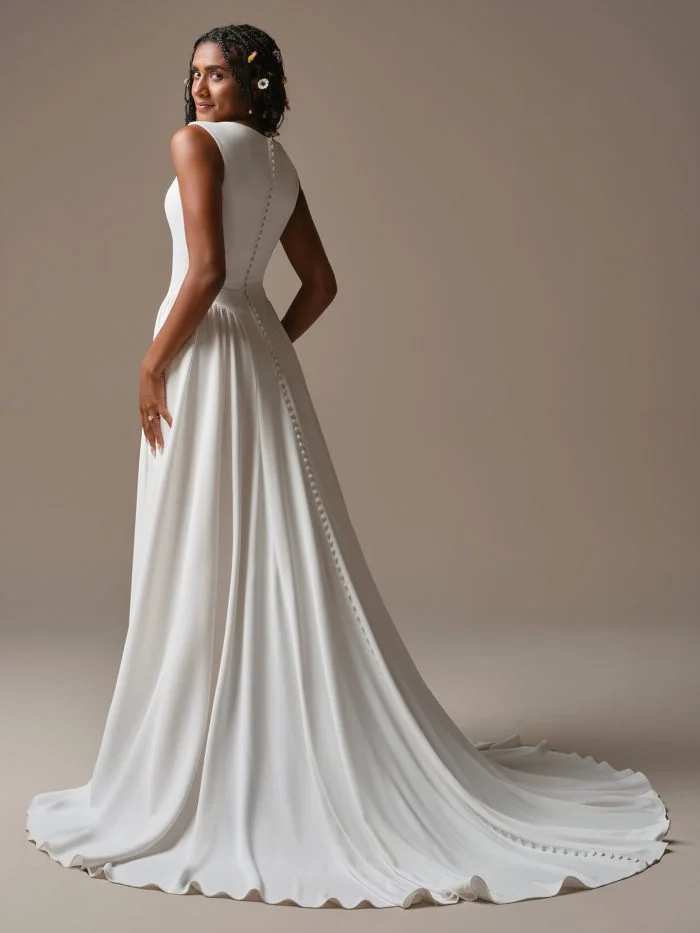
Mountain and cool-weather weddings
Cooler destinations call for planning across the full day: a sunny ceremony can give way to wind or a chilly evening. Long sleeves, layered textures or an accessory may add coverage while keeping the gown aligned with your style.
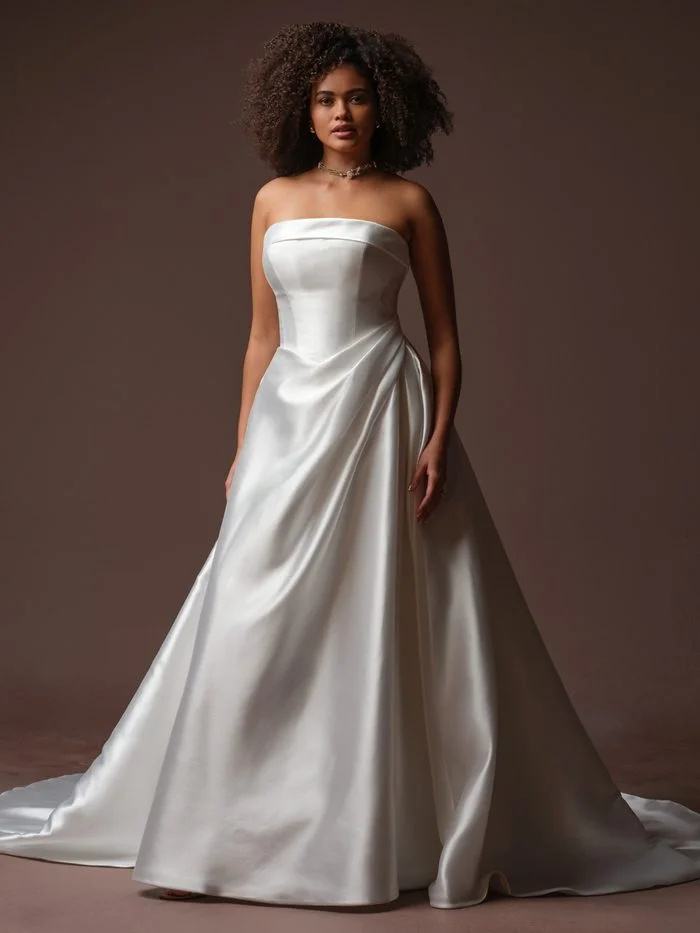
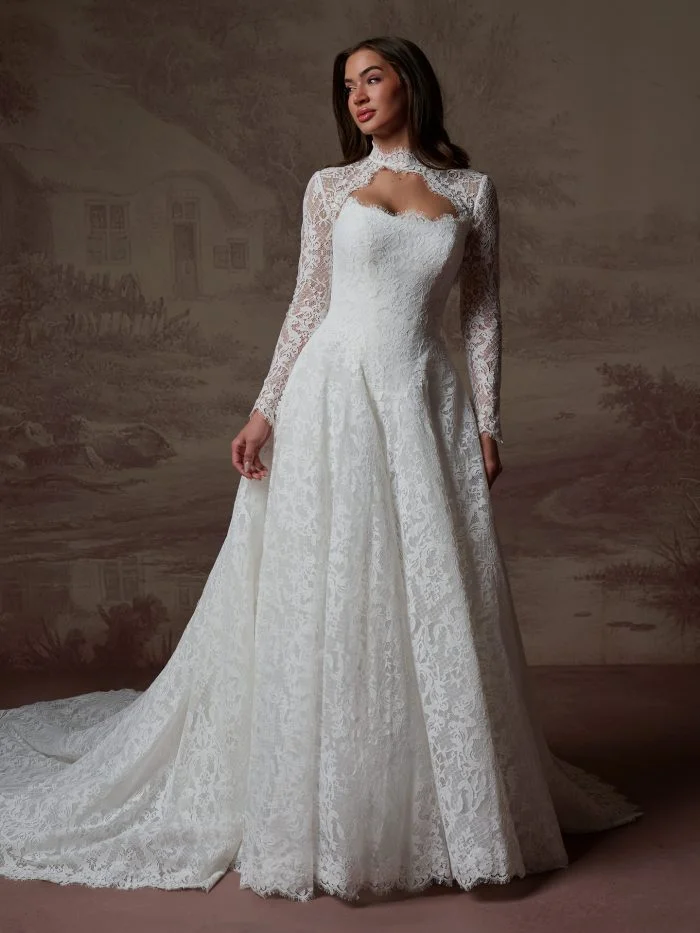
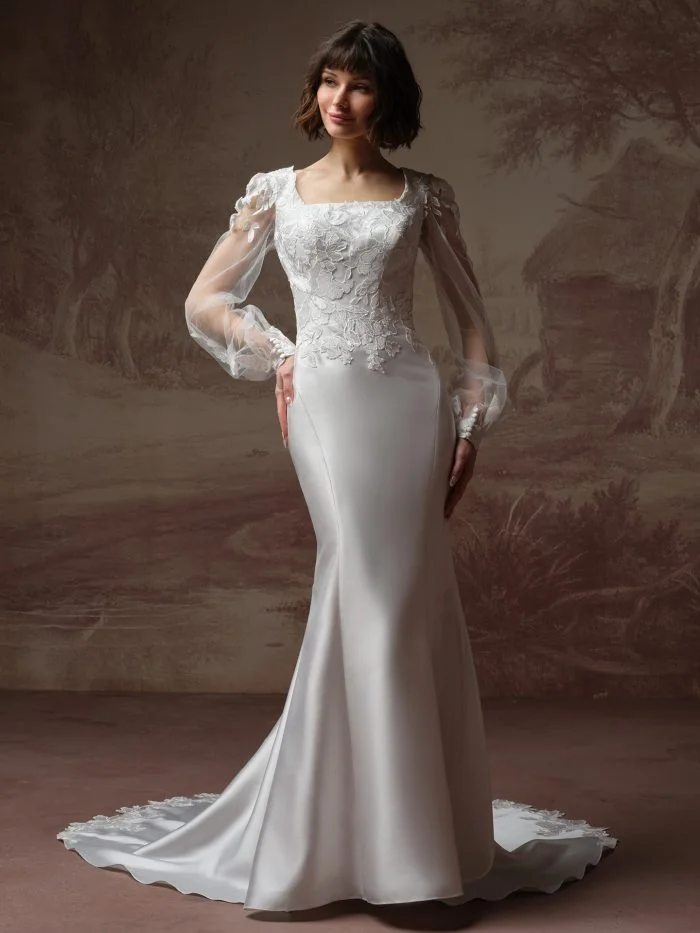
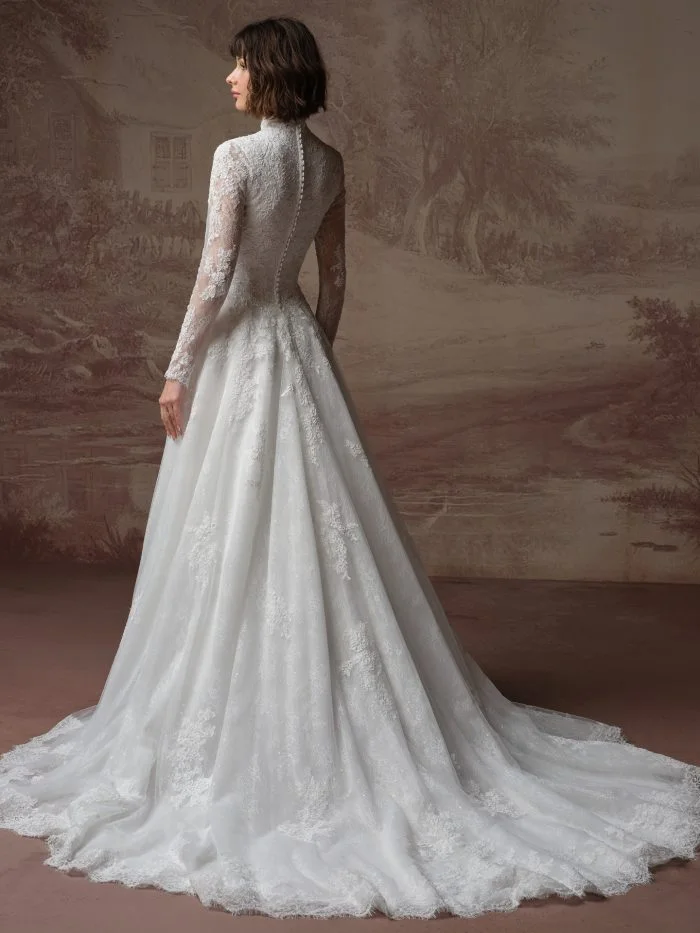
Dominique by Maggie Sottero features corded lace, a high neckline, long illusion sleeves and a Basque waist. Its formal details suit an elegant mountain setting or historic venue.
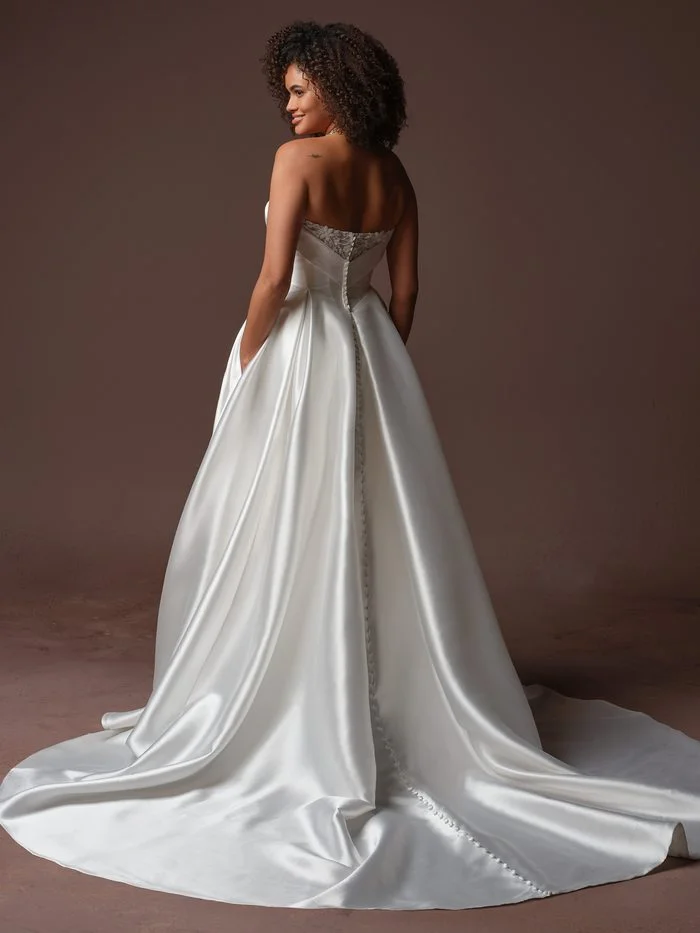
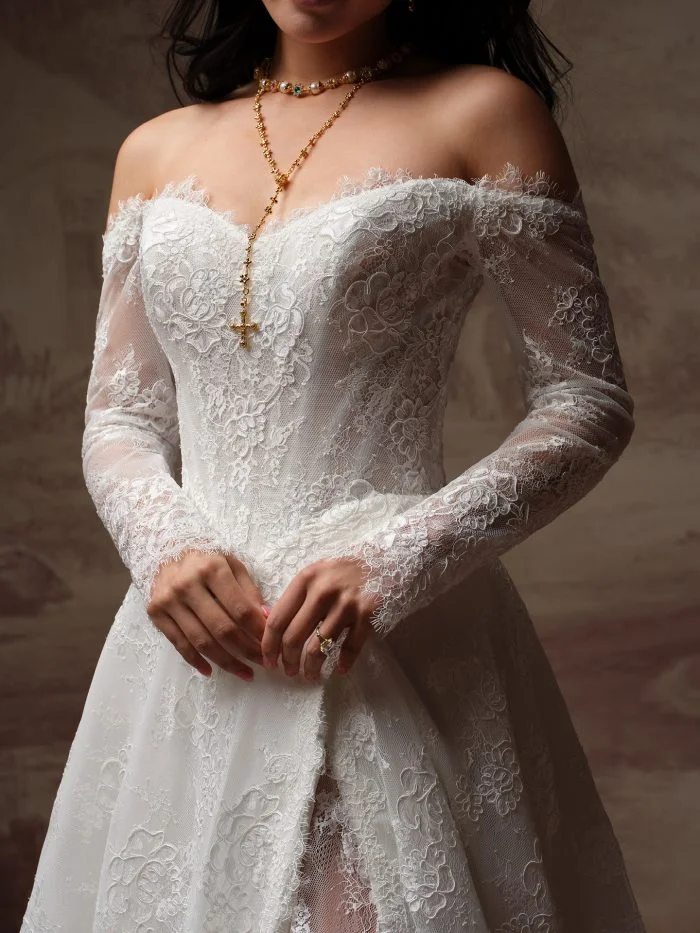
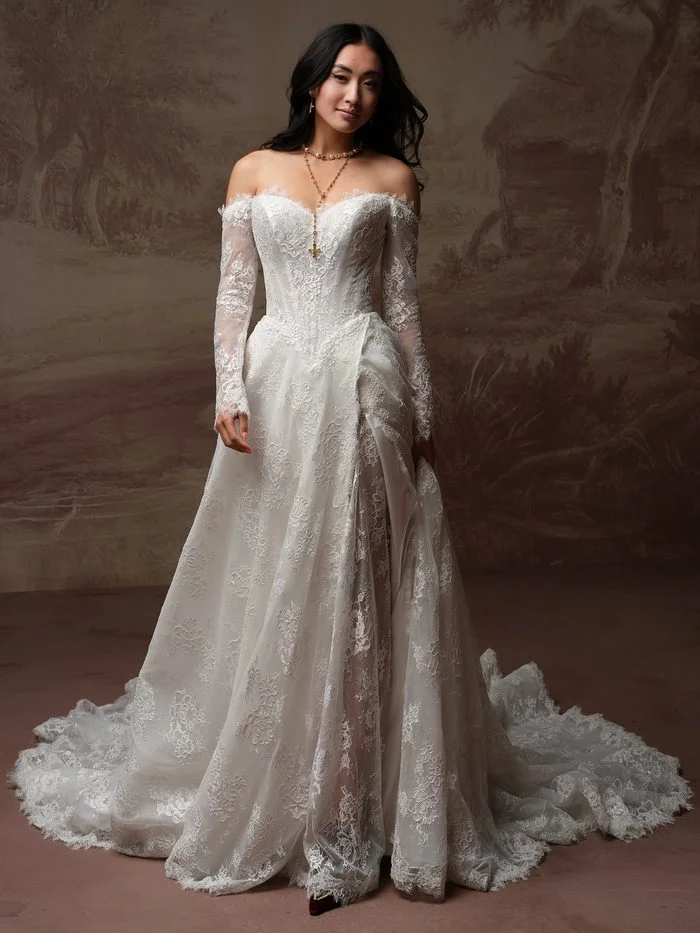
Vespera by Sottero and Midgley balances allover Chantilly lace and long off-the-shoulder sleeves with a modern Basque waist. Its skirt slit is another detail to consider when thinking about movement and portraits.
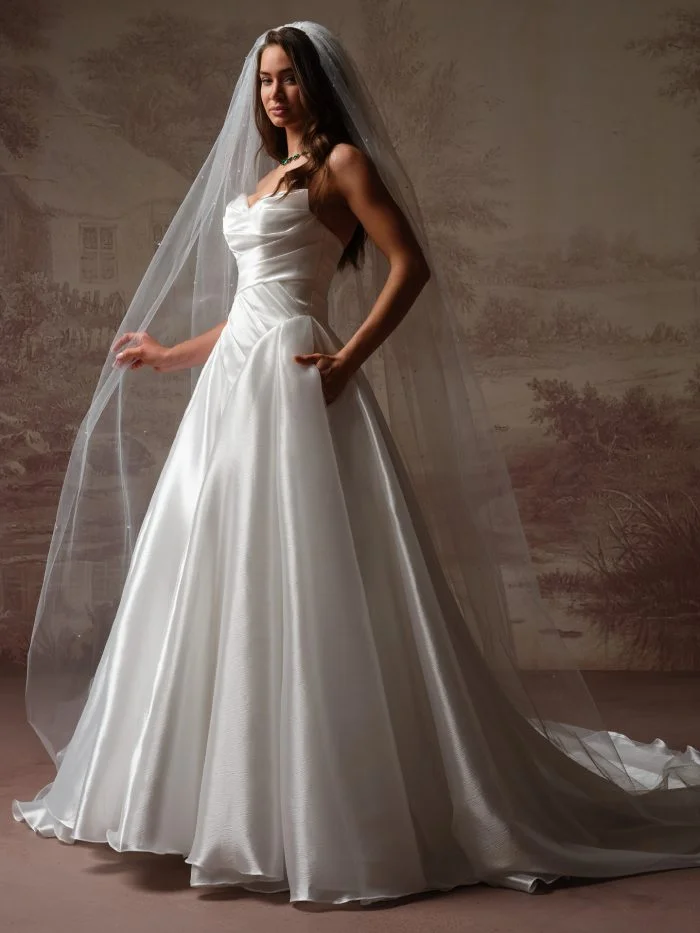
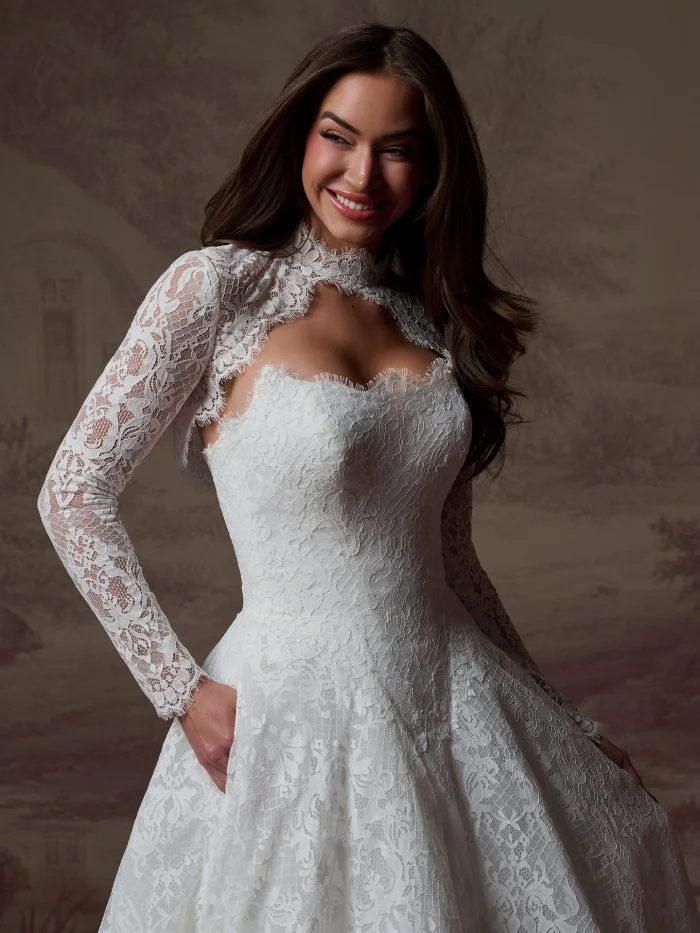
For vintage-inspired drama, Serena by Maggie Sottero pairs a deep Basque waist and Chantilly lace with a ballgown silhouette. The coordinating Serena jacket adds another styling option.
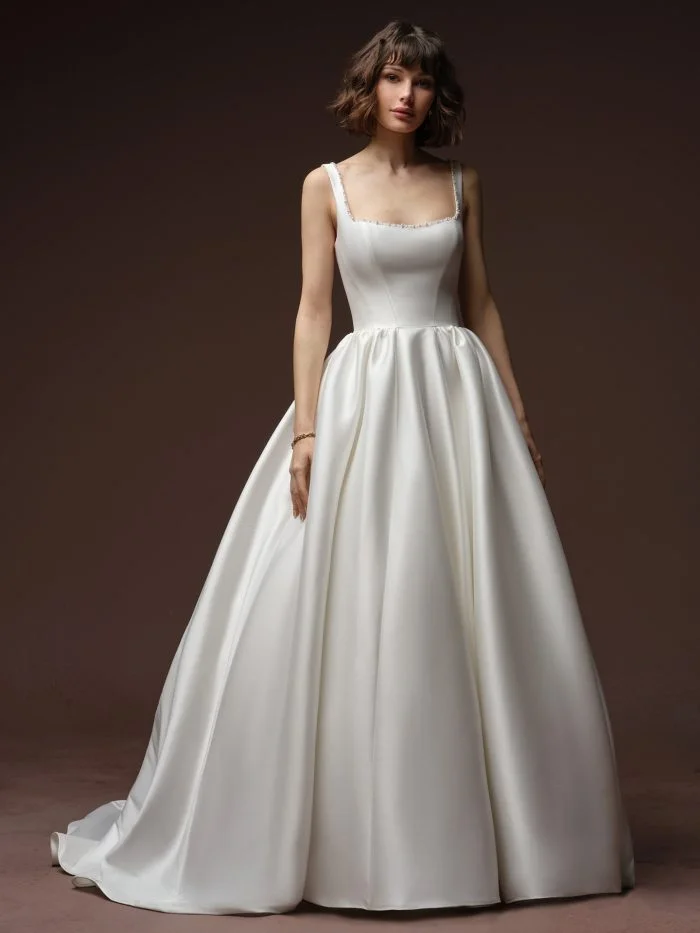
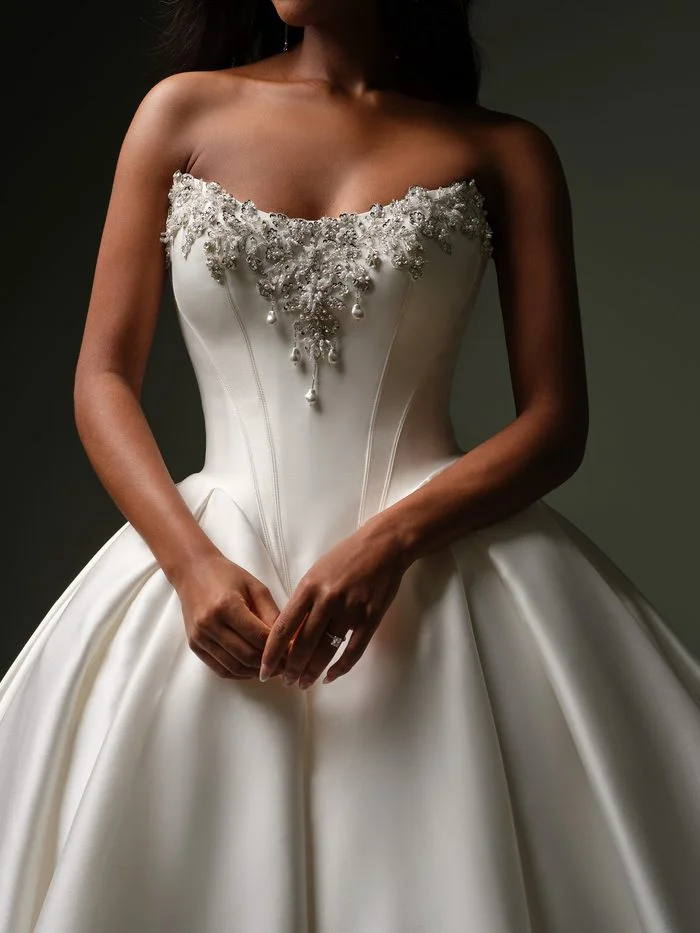
Zurielle by Maggie Sottero offers a structured Mikado silhouette with a square neckline embellished with crystals and pearls. It’s a formal choice for brides who prefer focused detail over allover embellishment.
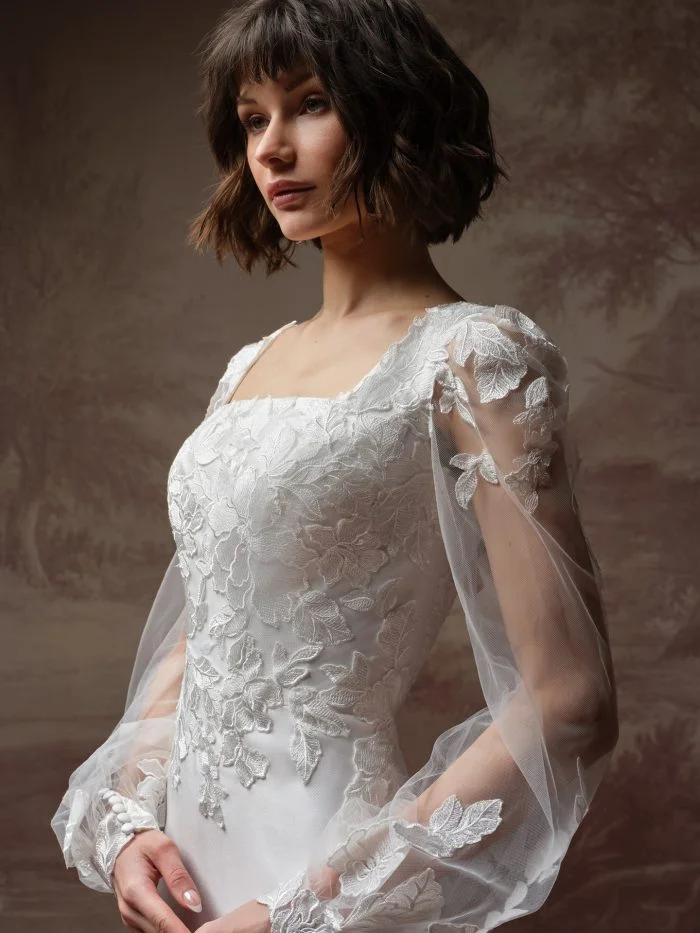
For softer coverage, Goldie Leigh by Rebecca Ingram combines lace motifs, a square neckline and long illusion bishop sleeves. The design can suit a lodge or countryside estate.
Plan the dress journey
Getting the gown to the destination takes as much forethought as choosing its fabric. Keep these steps in order as you prepare:
- Ask the airline early. When possible, keep the gown with you instead of checking it with regular luggage. Contact the airline about current carry-on dimensions, garment-bag rules and onboard storage. Policies vary, so don’t count on closet space.
- Protect the gown and its details. Use its intended garment bag. Ask your Authorized Boutique how to fold or pack it if needed, especially if it has delicate lace, beading, a structured bodice or a voluminous skirt.
- Make a wrinkle plan. Ask the boutique or a professional gown-care specialist how to steam or press your particular fabric safely. Avoid trying unfamiliar products or heat settings just before the wedding.
- Allow arrival time. If possible, reach the destination a few days before the ceremony. That buffer can help with travel delays and gives you time to arrange steaming or professional pressing.
- Plan transport after the flight. Decide how the gown will get from the airport to your accommodation and venue. Keep it away from food, makeup, pets and other hazards, then hang it somewhere safe when you arrive.
A travel-ready gown doesn’t have to be short or simple. What matters is understanding its structure and care needs, then making a realistic plan to transport it.
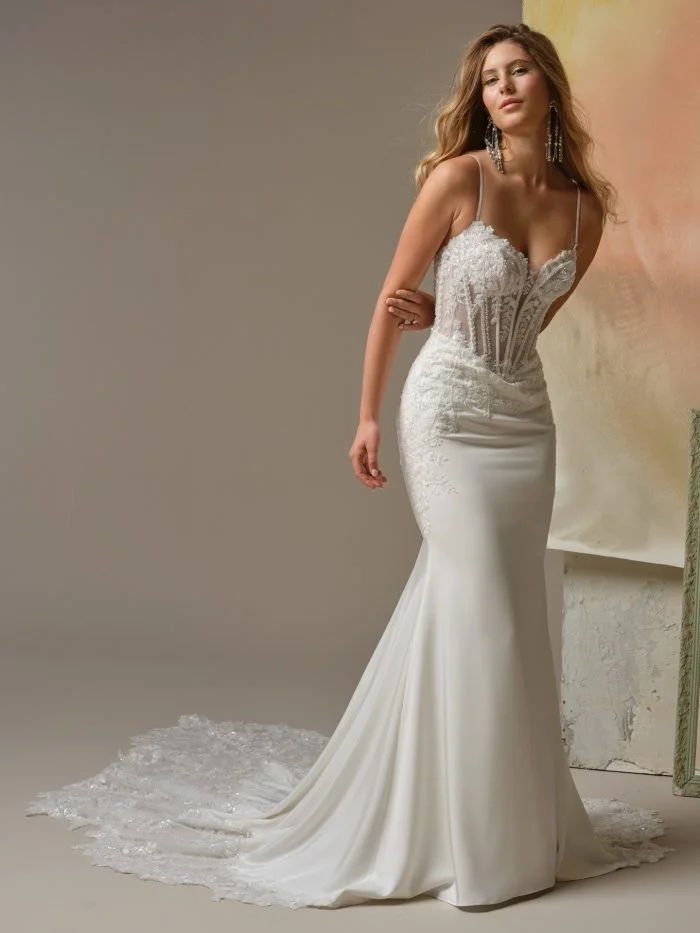
Coordinate shopping, fittings and the day itself
Destination planning often means coordinating travel, accommodations, vendors and guests across locations. Starting gown shopping around a year before the wedding leaves time to compare styles, order a dress and arrange alterations. Timelines vary by gown and boutique, so ask about current ordering and delivery estimates before committing to a schedule.
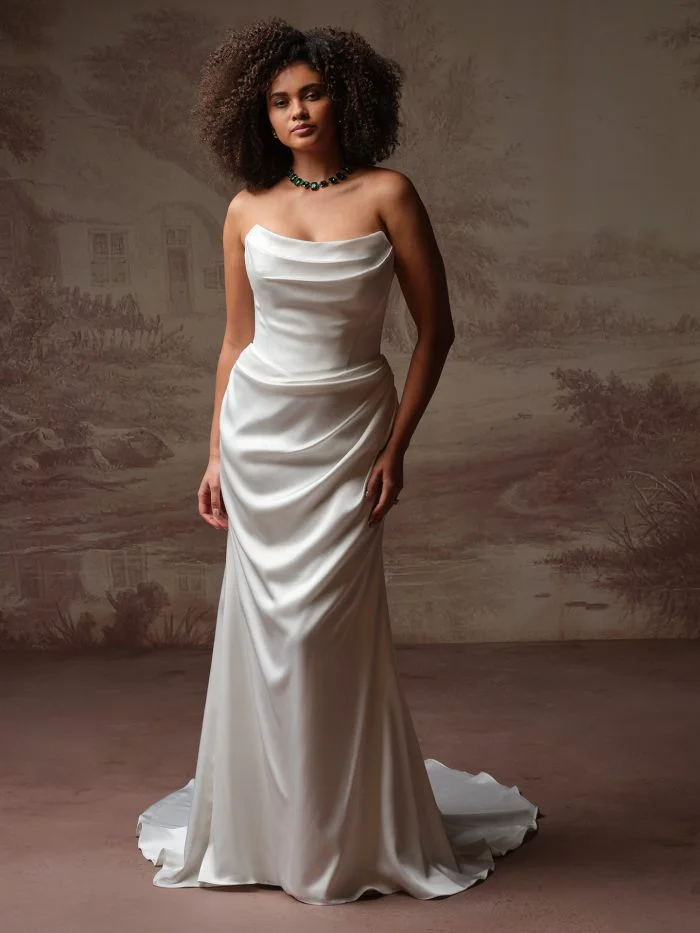
Consider the climate and venue together. A warm-weather location may still bring a breezy evening, while a mountain setting can shift between sun and wind. Detachable sleeves, a jacket or another accessory can give you options through the day.
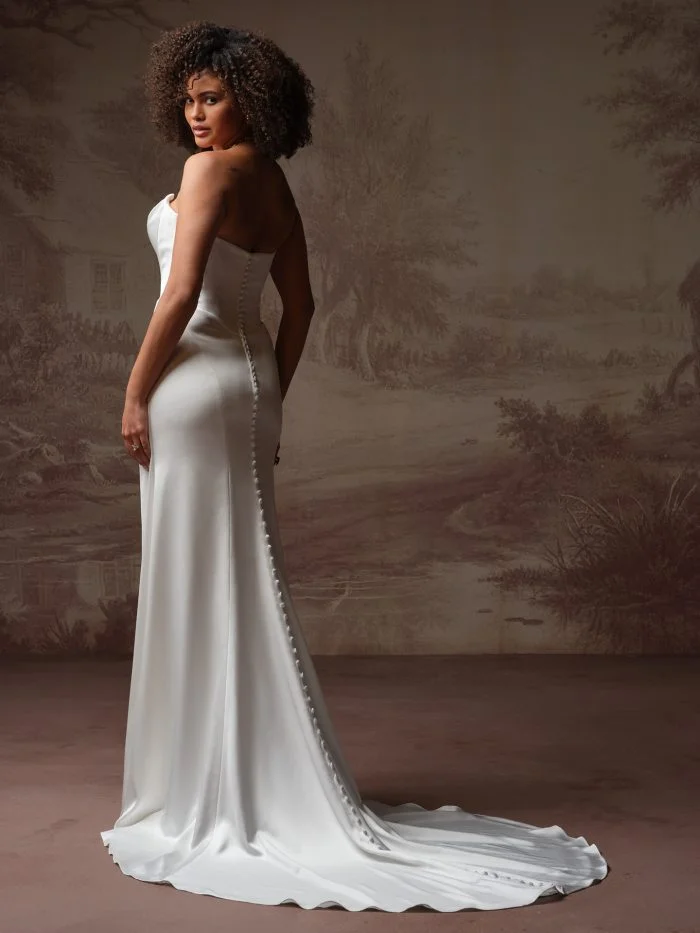
Choose shoes for the ground underfoot. Sand, grass, cobblestones and rocky paths can change how comfortably you walk, so bring footwear suited to the terrain. Talk with your boutique and alterations professional about hem length and train options.
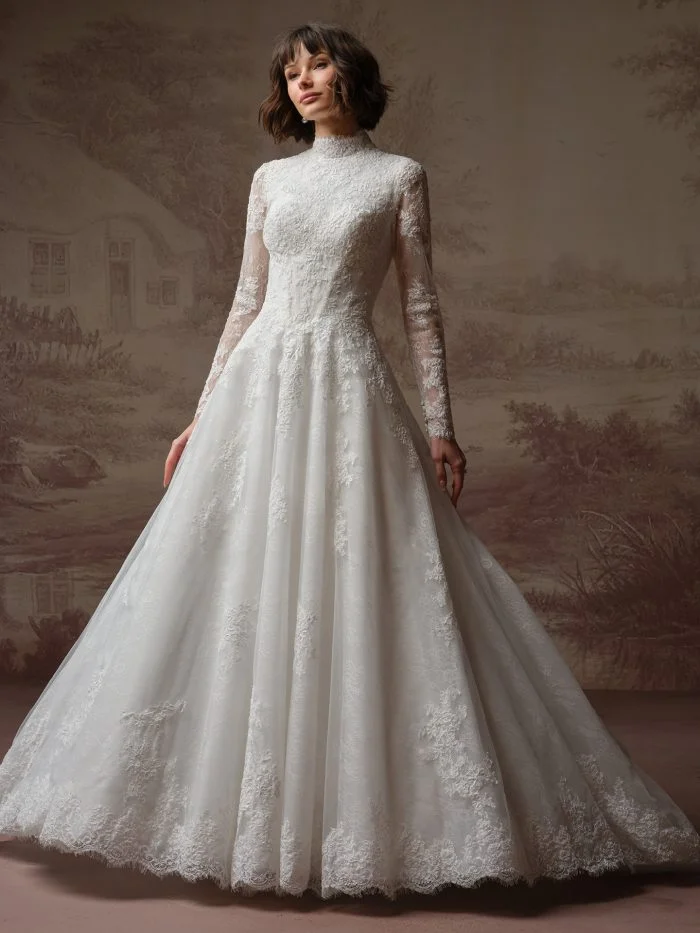
Build in time for fittings and adjustments. The gown should feel comfortable and allow the movement your day requires. If alterations will happen before travel, discuss that timing with your alterations professional well ahead of departure.
For an elopement or shorter engagement, look into Quick Ship wedding dresses and the Quick Ship guide. Availability and delivery timing can vary; an Authorized Boutique can explain the options for your schedule.
From chiffon to Mikado, the most useful choice balances personal style with climate, terrain and travel plans. Start with how the gown will feel and function across the whole celebration, then choose the details that make it yours. The destination sets the scene; your dress should fit the way you want to celebrate.